Category: pre and post natal care

  • Active Women And The Menstrual Cycle

    active women
    active women

    For long I’ve discussed with my clients about benefits of regular exercises on the menstrual cycle and working out based on your menstrual cycle. I have personally experienced the benefits of reduced cramps and back pain during the menstrual phase and now I sync my workouts according to my menstrual cycle.

    If you are a women who loves to work out just like me, but does not feel like doing the same routine each week, then here is some information to guide you through making a workout schedule that suits your cycle. How? That’s by understanding your menstrual cycle or the effect of hormones that change levels throughout the cycle.

    Lets try and understand the basics of a menstrual cycle first.Now the normal menstrual cycle lasts for 28 days and it has 4 phases. Namely;
    1. Menstrual phase
    2. Follicular phase
    3. Ovulation phase
    4. Luteal phase

    Menstrual Phase:-

    During the menstrual phase, your uterus is shedding the lining it has built up throughout the month. This will typically be days 1 to 7 of your cycle. At the very beginning of your period, your progesterone and oestrogen levels will be at their lowest, which along with the loss of blood may cause you to feel depleted of energy. As your period goes on, these hormone levels will gradually increase.

    If you experience feeling fatigue during the early days of your period, you may not necessarily feel like doing much intense exercise. However, if you feel physically able, there is no medical reason to not exercise during the menstrual phase of your period.

    How should you exercise during the menstrual phase?

    Depends on your flow levels actually. If you are someone who experiences low energy and heavy flow then you should choose a restorative form of exercises but if it all you are a woman with a lighter flow and normal energy levels then you can take up heavier work outs.

    Here are some suggestions for exercise you could do during the menstrual phase.
    1. Relaxing yoga poses or stretching
    2. Walking or light cardio
    3. Lighter strength training

    You can continue to do strength training during the menstrual phase of your period, but at this stage it might be wise to reduce the weights of your workout. Due to increased fatigue, the menstrual phase is not the time to push yourself too hard — so try sticking to where you’re currently at or even taking it a little easier than usual.

    Exercising during the follicular phase

    This phase starts as soon as your periods are over and is a good phase to progress your levels of work outs or take up challenging workouts. Infact I advise women that if you decide to take a marathon or a tournament your body will work and recover very well during this phase. Why?
    (more…)

  • Post Natal Back Pain – A Personal Take

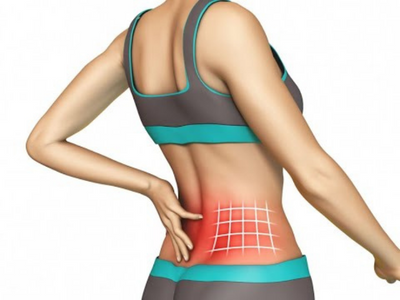
    Its been a while since I wanted to share my personal experience of dealing with post pregnancy back pain and finally I decided to share my experience .Post Natal Back pain has been a trouble to 90% of the moms and its been their reason of being afraid to exercises too soon or take up fitness like before their pre preganacy days.


    postnatal fitness


    Its a beautiful feeling to have your baby finally in your arms but , its a difficult time immediately post pregnancy. there is no day and night schedule for the first 40 days ( like they say in traditional Indian words to which I totally agree), you need to recover out of the birthing experience yourself, you need to get to know your baby more (no doubt your partner and family support is always there) but still its a different experience.

    For me, it was a C-section or a planned delivery and I started experiencing back pain second day post delivery. it was really difficult to turn sides, get up from the lying down position. if I got up from the chair, I would be bent for a while and then gradually straighten up. once I lied down after feeding my baby in sitting position, even lying down flat would be uncomfortable. somewhere it struck me that the earlier the measures are taken to solve the back pain, the better will be the recovery.

    I started my back care after getting discharged from the hospital, at home basically. I started hot compress initially, atleast 3-4 times a day. there where medications to deal with the pain for the first 10 days as well. I did not follow any exercises for the first 2 days in the hospital.

    As soon as my baby delivered on the 3 rd day , I started with this simple exercise to activate lower back muscles along with pelvic floor muscle training along with hot compress and started to feed my baby in sitting position most of the times.

    Its very important to take a good back support while feeding the baby and avoid slouching as it aggravates the lower back pain.

    At this point every time, I sat for nursing , I would ensure there is sufficient back support and i’m not sitting uncomfortably in a wrong posture to feed. it the most important thing to follow till u continue feeding your baby.

    At 2 weeks, I started with these lower back = beginner level rehab exercises. These worked fantastically to activate my lower back muscles. I would do the following exercises everyday in the morning post a traditional Indian massage along with PFM’S each for 10 repetitions daily for the next 2 weeks.

    At 4 weeks, I started with Mckenzie back extensions, supine bridges, level 0 and Level 1 core muscle exercise along with 20 min leisure walks daily to add on the previous program. I continued taking hot compress at least twice in a day.

    As a traditional Indian measure, I had also started massage with a local masseur, which helped relax the back every day. I also had a few diet changes to support my recovery which were majorly traditional Indian measures.

    Normally most informative websites will advice to start exercising only after 8 weeks of pregnancy. but the latest research says otherwise, the earlier you start doing easy and low key exercises the faster you will recover from back pain due to pregnancy

    At 8 weeks, I was doing half an hour walks daily along withe these core strengthening for lower back  exercises.

    Currently I occasionally experience back pain, to be frank, sometimes it is not possible to keep the schedule as i’m still learning the art of multitasking with baby, work and house responsibilities, all in one hand.

    I think what really helped me is all the activity during my pre natal time. being active, to not stop working or not to be adviced bed rest, to do squats during pregnancy were few things helped me get back to fitness faster.

    currently i’m following this core stability program which is based on Pilates school of thought to keep my lower back strong. Check it out !!

    If you have faced a similar problem do contact me at physiocure17@gmail.com, I maybe able help you out.

    PS:- share this article and follow the blog post for further updates on regaining my fitness post pregnancy.


  • Squats During Pregnancy

    Each woman has a different take on pregnancy based on the lifestyle, culture, general fitness, complications accompanied with the pregnancy. In this article we want to show research based benefits of squats during a “HEALTHY PREGNANCY”. We strictly advise your to consult a gynaecologist and your ANC consultant before you try these exercises.

    Research shows that exercise during pregnancy has a positive effect on the pregnancy and labour. Similarly performing squats throughout the pregnancy can have following benefits:-

    1. Keeps Lower back, core muscles and lower body strength maintained.
    2. Helps in opening up hips and pelvis by the third trimester , which helps in easier labour.
    3. Helps in maintaining the strength of the pelvic floor muscles
    4. Can prevent back pain during and after pregnancy.
    5. Helps in maintaining a good posture during pregnancy.
    6. Prevents excessive weight gain

    v

    In the past few years a lot of pregnant ladies who came in to learn ANC exercises expressed concerns like, performing squats causes increased intra-abdominal pressure, which affects the blood supply to the baby. The second myth I came across is avoid performing full squats or for that matter bending forwards or sitting on the ground as it may affect the baby’s growth. As an ANC consultant , I would say it differs from case to case.

    Given the vast Indian cultural history, our ancestors have given births without any science to support them. women were working in the kitchen or the house with the need to squat or sit on the ground or a small step for every little chore. By just doing their everyday chores while sitting on the ground and getting up  they squatted several number of times in a day and still normal babies where born. So its absurd not to sit on the ground or not to squat.

    Secondly if considered squats as a form of resistance exercises there is research to prove squats do not affect the pregnancy or the baby health. Check out this research paper if you are into fact finding spree

    https://obgyn.onlinelibrary.wiley.com/doi/pdf/10.1111/aogs.12525

    The take away:- well this research doesn’t about safety of squats but it says resistance exercises in general lead to a better out come. The sample size is small, but some evidence is better than none.

    Deep squatting seems to offer a better overall way to stretch and align the pelvis in pregnancy and help the baby to descend.  Many of the fifty or so clips and articles I’ve reviewed wisely , but only a few of the web articles differentiate between the parallel and deep squat and even less listed are any contra indications.

    The contraindications to doing deep squats are:-

    1. hemorrhoids,
    2. vasa previa,
    3. placenta previa or
    4. a breech lie.

    But perhaps the more serious contraindication for squats is lightening (when the baby descends into the upper pelvis) which normally occurs around the 34-38 week mark in primips but could be earlier or later

    Biomechanically seeing the full squat, it has its pros and cons. If done with the correct technique, it has the above mentioned benefits. But when done a full squat in a wrong manner can put undue pressure on the pubic joints or the sacroiliac joints in your pelvic girdle. So make sure you learn the correct form from your certified trainer/yogi/physio if you are inexperienced in performing a full squat.

    Here is a list of different type of squats which you can do safely during pregnancy

    (1)BODY WEIGHT SQUATS

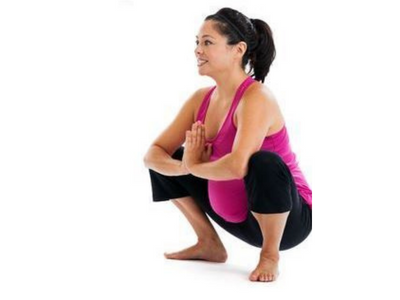
    FULL/ DEEP SQUATS

    During pregnancy, the weight of your body may offer enough resistance for you to work out effectively. But you can always add weight by holding dumbbells in each hand, or by setting a barbell across your shoulders.

    1. Stand with feet shoulder-width apart.
    2. Hold your arms straight out in front of your body for balance if you don’t have weights or a bar.
    3. Lower yourself into a full or a half squat position. Only go as far as you’re comfortable while keeping your back straight, weight in your heels, and knees behind or in line with your toes.
    4. Return to starting position, squeezing your glutes on the way up.
    5. Perform 3 sets of 10 to 15 repetitions.
    HALF/PARELLEL SQUATS

    Note :-

    1. performing full squats in the right form aides the above mentioned benefits
    2. Avoid the half squats if you have never worked out before or you have existing knee pain.
    3. Performing the squats in front of the mirror, helps you in achieving the correct form.
    4. Weights or resistance to be added only after consulting your personal trainer and/or physio.

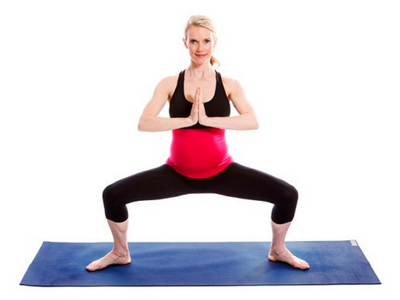
    (2) SUMO SQUATS

    This squat variation targets the inner muscles of the thighs and glutes. It’s also an excellent stretch to open up the hips.

    Note: Your joints are more flexible during pregnancy, so it’s easy to strain yourself by stretching too far. Do not go past your normal range of motion.

    1. Step out into a wide stance with your feet greater than shoulder-width apart and toes pointing outward, with knees tracking in line with the toes.
    2. Lower yourself into a squat position. Only go as far as you’re comfortable while keeping your back straight, weight in your heels, and knees behind or in line with your toes.
    3. Keep your legs turned out throughout the movement, making sure your knees do not cave in toward each other.
    4. Return to the starting position, squeezing your glutes on the way up.
    5. Perform 3 sets of 10 to 15 repetitions.


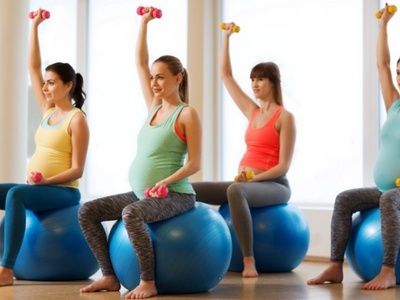
    1. SQUATS AGAINST WALL WITH EXERCISE BALL

    This exercise adds a level of instability to further engage the core muscles during the squat movement. If this exercise bothers your knees, only go as low as you feel comfortable.

    1. Stand against a wall with an exercise ball between the wall and your lower back.
    2. Place feet shoulder-width apart.
    3. Hold your arms straight out in front of your body for balance.
    4. Contract your abdominals by pulling in your bellybutton as if you were trying to pull it to the ball behind you.
    5. Lower yourself into a sitting position. Only go as far as you’re comfortable while keeping your back straight and shoulders back.
    6. If you find you have a lot of pressure on your knees, make sure your feet are far enough away from the wall to maintain a 90-degree angle at the knee when in a full squat.
    7. Return to starting position, squeezing your glutes on the way up.
    8. Perform 3 sets of 10 to 15 repetitions.


  • Effects of Exercises in Pregnancy

    For long now, women have been scared away from exercising during pregnancy, but there are more and more articles floating on the web talking about all the positive effects of exercising during a normal pregnancy. At Physiocure, we advise all women with a normal pregnancy to adopt some form of safe prenatal exercises to have an even better and injury-free time, once their baby arrives.


    Current studies indicate that healthy women with an uncomplicated pregnancy do not need to limit their exercise for fear of adverse effects (Whaley et al. 2006). Women should be encouraged to do consistent, moderate-intensity exercise, however women with complicated pregnancies have been discouraged from participating in exercise activities for the fear of impacting the underlying disorder (Davies et al. 2003). According to Kramer & McDonald (2009) regular aerobic exercise during pregnancy appears to improve physical fitness. Women who are exercising prior to the pregnancy can continue to do so without any major modifications. However, many women will change their program because they have symptoms, discomfort and risks associated with joint laxity and body mass gain (Whaley et al. 2006). This joint laxity should also be taken in consideration during stretching. Most woman start exercise programs in the second trimester because often the symptoms as nausea, vomiting and profound fatigue are less in that stage.

    Exercise prescription

    During pregnancy maximal exercise testing is not recommended. If a test is needed this should be undertaken under the supervision of a physiotherapist. Women who were less active or sedentary before the pregnancy should go to a physiotherapist before they start exercising.The recommended mode, frequency, duration and overload of the exercise are consistent with general principles of fitness training (Table 1).

    Table 1: GENERAL FITNESS EXERCISE PROGRAM (Whaley 2006)
    Components Frequency Intensity Duration Activity
    Cardio respiratory 3-5 /week 40% – 85% HRR or Vo2R 55% – 90% HRmax   12-16 RPE 20-60 min Large muscle groups

    Dynamic activity

    Resistance 2-3 /week Volitional fatigue (MMF) (e.g. 19-20 RPE)

    OR

    Stop 2-3 reps before volitional fatigue (e.g. 16 RPE)

    1 set of 3-20 repetitions (e.g. 3-5, 8-10, 12-15) 8-10 exercises IncRemove featured imagelude all major muscle groups
    Flexibility Minimal

    2-3/ week

    Ideally 5-7/week

    Stretch to tightness at the end of the range of motion but not to pain 15-30 seconds  2-4 repititions Static stretch all major muscle groups

    Research also reports that light resistance training can be performed over the 2nd and 3rd semester and that does not have an effect on the newborn body size or overall health. They conclude that resistance training during pregnancy decreases the negative effects of maternal weight on the newborn size. Davies et al. (2003) recommends the `talk test´ method to monitor exertion, which means that the woman must be able to maintain a conversation during exercise. He explains that if she is unable to do so, reduced exercise is advised.

    Table 2: MODIFIED HEART RATE TARGET ZONES FOR AEROBIC EXERCISE IN PREGNANCY (Davies 2003)
    Maternal Age ( in years) Heart Rate Target Zone       

            (beats/min)

    Heart Rate Target Zone

           (beats/10 sec)

    Less than 20 140 – 155 23 – 26
    20-29 135 – 150 22 – 25
    30-39 130 – 145 21 – 24
    40 or greater 125 – 140 20 – 23


    According to ACOG (2002) a prescription of 30 to 40 minutes or more of moderate activity on most or all of the days in the week is advised and 3-5 times a week for more intense physical activities. There is a difference between women who have been inactive prior to pregnancy and women who have been active. The inactive women should begin with a light-intensity program (20%-39% HRR), this means low impact activities such as walking and swimming. Previously sedentary woman should start with 15 minutes exercise, 3 times a week, increasing this gradually to 30 minutes session, four times a week. He recommends that in this session abdominal strengthening should be excluded as there may be development of diastasis recti and associated muscle weakness. However core stability is an important part of exercise during the pregnancy. Goals should include maintenance of cardiorespiratory fitness, muscle mass and physician-recommended weight gain (McArdle et al. 2006).

    Pelvic floor training>

    Pregnancy and pelvic pain have an important impact on women on a daily basis. Stuge et al. (2002) explains that lumbo-pelvic stabilization could be achieved by exercises and have an influence on appropriate posture and enhanced muscle function or by use of an orthotic device like a pelvic band could have an influence on it. He explains that there is no strong evidence that the effect of physical therapy interventions helps with the prevention of low-back pain and pelvic pain related to pregnancy but there are no facts that exercise doesn’t help. However, he mentions that water gymnastics has shown a lower pain intensity and sick leave compared to no intervention, but this could be due to the effect of attention. A training program for the pelvic floor muscle can be associated with fewer cases of active pushing in the second stage of labour lasting longer than 60 minutes.

    Exercise in the Postpartum Period

    Depending on the type of delivery, most types of exercises can be continued. The women may need to reduce the activities due to fatigue of delivery and newborn care. Brukhner & Khan (2007)  state that the changes caused by pregnancy take some time to return to normal, so care should be taken in the first six weeks after delivery to avoid sudden high impact or contact activity. They explain that if the delivery was a caesarean section, women may need to avoid strenuous activity for six weeks and heavy weight training for 12 weeks. This depends on the recovery such as anemia or wound infection.  Pelvic floor exercises are good to reduce the risk of future urinary incontinence (Morkved & Bo 2000).

    Breastfeeding is a part that also needs to be considered after pregnancy. The exercises should not interfere with the ability to breastfeed. Although exercise doesn’t affect the milk production or composition, lactic acid has been shown to be increased in the breast milk of women exercising at maximal intensity, but not in those who exercising at normal level (Davies et al). 2003) the growth of breastfeeding babies of mothers who exercise is normal. This is even the case for mothers who are losing weight as part of their exercise.


    Exercise to prevent complications

    1.    Gestational diabetes mellitus (GDM)

    Avery (1997) concluded that in women who started a home-based exercise program there was no reduction in glucose levels. According to Dempsey et al. (2004) an increase in physical activity may reduce the risk of gestational diabetes mellitus. Physical activity, especially vigorous activity before pregnancy and at least light to- moderate activity during pregnancy may reduce risk for abnormal glucose tolerance and GDM (Oken et al. 2006). There is inconsistence evidence whether exercise has a positive or negative effect on gestational diabetes.

    2.    Preeclampsia

    Preeclampsia is identified by increased blood pressure and protein in the urine, women usually don’t have any symptoms in the beginning.

    Women who are doing leisure-time exercise during pregnancy where less likely to develop preeclampsia compared to those who didn’t participate in exercise. Relative to inactive women, the pregnant women who were vigorously active during pregnancy experienced a 54% reduction of risk for preeclampsia, and those who engaged in light or moderate activities experienced a 24% reduction of risk (Lewis et al. 2008).


    3.    Weight gain

    Total weight gain is measured in the following categories: low (<10 kg), medium (10–15 kg), high (16–19 kg), or very high (>20 kg). Research explains that generally low gestational weight gain was an advantage for the mother, but it increases the risk of having a small baby, particularly for underweight women. In conclusion heavier women may benefit from avoiding high and very high pregnancy weight gain, which brings only a slight increase in the risk of growth restriction for the infant. High weight gain in underweight women does not appear to have deleterious consequences for them or their infants, but they may want to avoid low gestational weight gain to prevent having a small baby.

    4.    Labor and Birth

    There is an overall positive relationship between a more favourable labor and delivery outcomes and exercise. In addition, even among women with diseases and previous poor outcomes, exercise during the pregnancy was not associated with either preterm birth or low birth weight. Juhl et al. (2007) results show a reduced risk in preterm birth among women who participated in exercise with 40% in comparison with non-exercisers, but no dose-response relation was seen.

    5.   Urinary incontinence

    About one third of the women have an incontinence leakage after they gave childbirth . Training of the pelvic floor muscle is an often recommended treatment during and after childbirth for prevention of incontinence and there is some evidence that pelvic floor muscle training in women having their first baby can prevent urinary incontinence in late pregnancy and postpartum (Hay-Smith et al. 2009). However, Ewings et al. (2005) states that pelvic exercise did not help prevent future incontinence, although this could be due to a failure of the women to return for the classes

    CONCLUSION:-

    In conclusion evidence indicates that exercise during pregnancy is recommended.  An important part of exercise during pregnancy is safety. Therefore listening to their body is a main factor. And pregnant women must be watched carefully and be made aware of conditions such as vaginal bleeding, dyspnea prior to exertion, dizziness, heachache, chest pain, muscle weakness, calf pain or swelling preterm labor, decreased fetal movement and amniotic fluid leakage.

    During exercise the heart rate should be measured closely and the talk test is an easy way to know if the woman is at the correct intensity level. The supine position should be avoided after 4 weeks of pregnancy.

    Finally, your physiotherapist should be well informed about exercise during pregnancy so as to empower you with the ability to have a healthy, safe and enjoyable pregnancy.

    SIMILAR ARTICLES:-

    Squats during pregnancy

    Safety Issues in Pregnancy

    Low Back Pain

    Post Natal Back Pain- a personal take!!

  • Safe Exercises In Preganacy

    Safely exercising during pregnancy has more perks than dangers. I have mentioned in almost all my pre and postnatal articles, that when u are able to exercise throughout your pregnancy, it prepares your body well for childbirth as well as for postpartum issues you may face. In this article, I will be covering a range of Do’s and Dont’s in terms during pregnancy to exercise safely.

    ACTIVITIES TO AVOID:-

    Activities that do not impact your and your baby’s health should only be taken up. For instance, Avoid activities where you could take a hard fall. You may have safely ridden a bike in the first trimester, but why risk it now? If bike riding is a critical part of your exercise routine, choose a stationary bike from here on out.

    If you’re an avid skier, stick to the bunny slope, or switch to cross-country. Anything that reduces potential oxygen flow, like scuba diving or activities at high elevation, isn’t safe.

    You should stop exercising if you:

    • feel queasy
    • get too hot
    • feel dehydrated
    • experience any vaginal discharge, bleeding, or abdominal or pelvic pain

    SYMPTOMS TO STOP EXERCISING DURING PREGNANCY

    • Vaginal bleeding
    • Dyspnea prior to exertion
    • Dizziness
    • Heachache
    • Chest pain
    • Muscle weakness
    • Calf pain or swelling (need to rule out thrombophlebitis)
    • Preterm labor
    • Decreased fetal movement
    • Amniotic fluid leakage


    CONTRAINDICATIONS FOR EXERCISES DURING PREGNANCY:-

    Relative Absolute
    ·       Severe trauma

    ·       Unevaluated maternal cardiac dysrhythma

    ·       Chronic bronchitis

    ·       Poorly controlled type I diabetes

    ·       Extreme morbid obesity

    ·       Extreme underweight (BMI<12)

    ·       History of extremely sedentary lifestyle

    ·       Intrauterine growth restriction in current pregnancy

    ·       Poorly controlled hypertension

    ·       Orthopedic limitations

    ·       Poorly controlled seizure disorder

    ·       Poorly controlled hyperthyroidism

    ·       Heavy smoker

    ·       Hemodynamically significant heart disease

    ·       Restrictive lung disease

    ·       Incompetent cervic/cerclage

    ·       Multiple gestation at risk for premature labor

    ·       Persistent second- or third-trimester bleeding

    ·       Placenta previa after 26 weeks of gestation

    ·       Premature labor during current pregnancy

    ·       Ruptured membranes

    ·       Preeclampsia/pregnancy-induced hypertension


    DEHYDRATION DUE TO EXERCISES:-

    Dehydration occurs when your body loses fluids faster than you take them in. It can make it harder for the body to perform its normal functions, leading to discomfort caused by constipation and swelling. During pregnancy, inadequate fluid intake over longer periods of time can also lead to low amniotic fluid, and it may trigger Braxton-Hicks contractions, a type of contraction that occurs during pregnancy. It can also lead to more serious complications such as birth defects.

    As a mom-to-be, you and your baby require more water than the average person. This is because water takes on additional roles during pregnancy. For example, water is an essential part of the placenta, which delivers nutrients to your growing baby, and the amniotic sac, which cushions your baby throughout pregnancy.

    TIPS TO AVOID DEHYDRATION:-

    1. Have enough fluids during the day (water, juices, green tea, soups)

    2. remembers basic signs of dehydration is dry throat, if you feel your throat has gone dry, lips are chapped. go and have a glass of water.

    3. If you exercise regularly have small sips of water before, during, and after the workout. but not too much otherwise it may cause nausea.

    4. Do not exercise outdoors during the hot time of the day, exercise either early morning or in the evenings after sunset.

    5. Avoid vigorous exercises on extremely hot days, take it easy.

    6. My personal favorite, is having fresh coconut water in the morning after the exercise or walk. it is perfect drink to rehydrate.


    MATERNAL HYPOGLYCAEMIA:-

    Pregnancy requires 300 kcal extra to maintain metabolic homeostasis. Calories need to match the exercise. Maternal hypoglycemia may be associated with energetic exercise, in the last trimester of pregnancy. The reduction in blood glucose may result from increased glucose uptake by the fetus and mother. To avoid this, women should take more carbohydrates with food, or more fluid drinks like fruit juice, coconut water before exercising.

    YOGA ASANAS TO AVOID:-

    No inverted poses (where your feet are over your head), poses where you’re on your back, or backbends. If anything doesn’t feel right, don’t do it — you’ve got the rest of your life to learn challenging yoga poses.

    You should avoid Bikram, or “hot,” yoga during pregnancy. These classes generally heat the exercise room to 104ºF (40ºC). Getting your body temperature above 102ºF (39ºC) can endanger your baby or cause you to get dehydrated.

    SPORTS TO AVOID:-

    Woman should not scuba dive during pregnancy, this is because the fetus is not protected from compression sickness and gas embolism.

    Women should choose activities that will minimize the risk of loss balance and fetal trauma for example horseback riding, downhill skiing, ice hockey, gymnastics, and cycling.

    When the conditions are normal moderate exercise altitudes up to 1,800 to 2,500 m does not appear to be dangerous for the maternal or fetal well-being (Davies et al. 2003).

    RUNNING DURING PREGNANCY:-

    If you were a runner before getting pregnant or safely ran in your first trimester, you probably can continue to follow your safe running routine. Remember that your body is changing. Specifically, your center of gravity is shifting.

    This means you should be careful not to fall. Stick to flat running tracks, or run on a treadmill with safety bars. Give up the trails and broken sidewalks for now.

    If you weren’t a runner before, now’s not the time to start.

    If you feel joint or back pain, or any other concerning symptoms, stop running.

    LIFTING WEIGHTS DURING PREGNANCY:-

    Exercisepregnancy

    All pregnant women, regardless of whether or not they lift weights, are at an increased risk for musculoskeletal injury. This is because the placenta produces a hormone called relaxin, which relaxes the body’s joints. This is critical since the pelvis needs to expand to accommodate the growing uterus and baby, and to allow the baby to pass through the birth canal during delivery.

    weight lifting is completely safe during pregnancy, as long as it is done in moderation. He also recommends sticking to weights under 30 pounds

    “Think bent over rows using a bench support and dumbells instead of a barbell and bending at the hips.”

    if you can hold a casual conversation during your workout, while feeling adequately challenged, you’re probably okay. Aim for breathing hard, but not feeling out of breath, and give yourself plenty of rest breaks for recovery during and between workouts.

    ABDOMINAL EXERCISES DURING PREGNANCY:-

    Myth: Stop training abs or you’ll risk separating your abdominal wall.

    Most article talk about stop abs completely, but as an experienced physio , I recommend doing certain abdomainal exercises for the following benefits:-

    1. Prevents excessive arching of the back, thereby reducing chances of back pain in post partun period.
    2. Improves core strength and reduces chances of Diastasis Recti
    3. More stability; during pregnancy our joints are more mobile making the body more flexible and prone to aches and pains, when u do weights, it just adds to the sense of stability and prevents these aches and pains.

    Abdominal separation is a real thing that many women in pregnancy experience. It’s called diastasis recti (DR). DR occurs because of the growing fetus pressing onto your abdominal wall. Your rectus abdominals, the “6-pack” muscles, will stretch because of this, and the connective tissue holding them together can get very thin and soft.

    There are specific core exercises that you should not do that can increase the DR — for example, sit-ups, crunches, and front planks.

    What can you do? Half and tall kneeling positions, Pallof presses, dead bugs, farmer carries, diaphragmatic breathing exercises, and pelvic floor exercises.

    Remember to not breath hold during these exercises.