This is a very common question that haunts a lot of people who visit a physio clinic for the first time or are visiting us for the first time. As an experienced therapist, i believe, a proper examination will , not just on the first visit but on each and every visit , helps us identify the problem areas , help chart out the course of treatment and inturn help design the best possible rehab plan for your existing issues.
Why does a physio need to examine, when the ortho has already given the diagnosis?
this is a very common question i’ve heard from only couple of my clients who got frank about their view about physiotherapy practices. so here is my explanation. when a physio examines a client with a neck pain or low back pain or knee pain, we are looking at structures involved in causing the dysharmony in the movements and how they can be corrected.
This is why clinical expertise in assessing the problem is important. through experience ,the physio can identify the structure contributing to the pain, problem and design a treatment plan.
On the first visit, we will analyse your history and current situation by understanding
Where you are having the problem
How did the problem start
How the problem is affecting your ability to do daily activities
Your past medical history and any medications you are taking
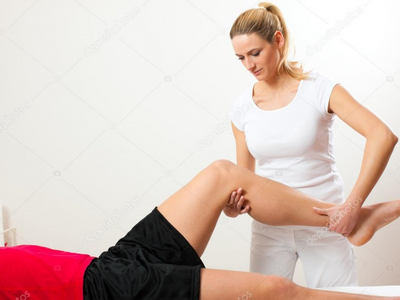
A detailed physical examination
Checking your posture
Examination of range of movement
Testing of movements specific to your problems & muscles strength
Functional tests specific to your problem like balance, walking patterns or how you carry load
Sometimes the assessment may be completed in 2- 3 sessions, depending on the severity of the pain or disability.
Once the assessment is complete, a diagnosis is made and we usually explain the problem to the client and how it will be dealt with from our side.
Quote
“Either you can do guesswork, or examine the problem….we choose the later“
if you want to visit us fillout this form and mail it on info@physiocure.in
Its 2020, we all are partly or completely urbanized and clearly we all need some guidance on how to move. Now thats where physio’s can play a crucial part apart from various other exercise science experts.
Let me tell you how!!
There are a lot of physio’s who can help solve your aches and pains by just advising the correct movements. like i said its 2020! Have you heard of therapies to solve your problems purely based on movement corrections. we at physiocure practice few of them.
Being into sports physio, I try to follow a mix of these various movement therapies to help all my clients with their injuries like Lowback pain, Headaches, neck pains shoulder impingements, knee pains, faulty postures etc
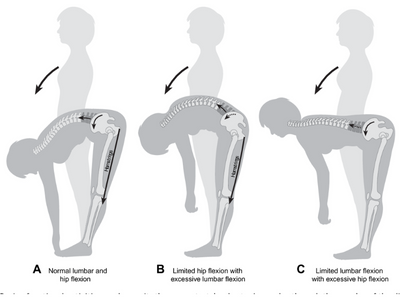
These are based on functional movement screenings for example to check how are you moving in the 7 basic movements of human life.
This therapy is not just restricted to treating your aches and pains. we as physiotherapists can also guide you and teach you correct way to do gym exercises by just examining once as to How do you move?
Its called Functional movement screening. its very effective for active people as well as athletes.
For clients who are experiencing lower back pain or neck pain, I usually follow a therapy based on Dr Shirley sahrmanns Movement Impairments Syndromes. It has been so far very effective in treating more than 10,000 clients at the clinic for various spine problems in the past decade.
What is Movement Impairment syndrome (MIS) ?
In 2000, Shirley Sahrmann, a renowned physiotherapist along with her colleagues introduced a new school of thought which uses examination of movements and identifying impairments which eventually help physiotherapists design treatment programs to treat musculoskeletal conditons like low back pain, neck pain, shoulder pain and many more. The basic concepts of MIS are based on the following points.
Musculoskeletal pain syndromes are the result of cumulative micro-trauma from accumulation of tissue stress and irritation resulting from sustained alignments or repeated movements in a specific direction(s) associated with daily activities.
the reason certain musculoskeletal pains develop because there has been minute trauma/stress on that tissue occurring for over years or a long time due to faulty adopted positions for your work or leisure.
The joint(s) that is moving too readily in a specific direction is the site of pain generation.
As a result, the affected area will move excessively in a particular direction, for example a person who has been using a computer with a wrong ergonomic setup and adopting wrong postures for years will be able to poke his chin out much more than an individual who has just started and complain of occasional neck pain.
The readiness of a joint to move in a specific direction, i.e., the micro-instability, combined with relative stiffness, the neuromuscular activation pattern and motor learning contribute to development and persistence of the path of least resistance.
The reason a joint can be moved excessively in one direction is the structures supporting it tend to stretch out and cannot be restored to normal length, the muscles surrounding that joint learn to function in a faulty manner and it ends up becoming the new normal position for that joint.
Treatment is based on correcting the impaired alignments and movements contributing to tissue irritation as well as correcting the tissue adaptations, such as relative stiffness, muscle weakness, and neuromuscular activation patterns.
Once your physio is able to identify this impairment, the treatment is as simple as correcting that impairment via corrective exercises and allowing the surrounding muscles and tissues to adapt to a better normal position.
Training to correct impaired alignments and movements instead of training “isolated muscles” will induce appropriate neural and musculoskeletal adaptations.
In summary, using this concept, the faulty movement is tested and corrected than typical physiotherapy/orthopaedic treatment and indirectly /directly the ailment is resolved with appropriate and simple measures.
The following example illustrates how correcting the impaired alignments and movements address the cause of the pain, which is not achieved by identifying the pathoanatomical source of the symptoms.
A patient is referred to physical therapy with the diagnosis of Supraspinatus Tendinopathy.
Tendinopathy is the pathoanatomic source of pain.
After assessing the patient’s scapular and humeral alignments and movements and associated symptom behaviour the physical therapist makes a diagnosis of insufficient scapular upward rotation with humeral anterior glide- basically the physio concludes that the shoulder blade is the reason of his pain and its inefficient work needs to be corrected.
The other components of the examination identify the contributing factors that include (1) relative stiffness, (2) muscle strength, and (3) neuromuscular activation patterns.
The idea behind the KPM is that classifying the patient according to impaired alignments and movements (i.e., Scapular Insufficient Upward Rotation, Humeral Anterior glide) is more useful to guide physical therapy treatment than identifying a pathoanatomical problem because these are the impairments to be corrected
check out this advanced shoulder blade exercise we recommend to our clients
TREATMENT PRINCIPALS:-
Treatment is based on correcting the impaired alignment and movement patterns as well as correcting the tissue adaptations associated with the impaired alignment and movement patterns.
Treatment includes patient education, analysis and correction of daily activities and prescription of specific exercises.1, 2, 79, 80, 81
Patient education refers to educating the patient about how the repetition of impaired movements and sustained alignments in a specific direction may be related to his musculoskeletal condition and how to correct the impairments during all of his daily activities, particularly those that cause symptoms.
For example, patients with Scapular Depression Syndrome may be taught to keep their scapula elevated by supporting their arms while working at a computer. The goal of the support is to reduce the sustained load on the cervical spine and the muscles that elevate the scapulae
The specific exercises and activities are performed during the treatment sessions and also are part of the home program.
Each patient receives pictures or figures of the specific exercises and daily activities with written instructions. Videos also can be used to teach the patient how to perform the exercises and activities.
For example- a patient referred to the clinic with low back pain required to be tested for single leg stance as a part of the examination. The following instructions were given to conduct the test and when one the impairments was identified, that movement was corrected using the same movement as an exercise with specific instructions
INSTRUCTIONS TO PERFORM THE TEST:-
Perform variation if box is checked
· Stand with both feet relatively close together to keep from shifting to the side of the stance leg.
· Shift your weight to stance leg
· Tighten your buttock muscle on the side of your stance leg
· Lift your alternate thigh in front of your body while bending your knee
o Contract your abdominal muscles
o Keep your pelvis level
++
o Place your hands on your pelvis to monitor your movement
++
o Do not let your opposite hip drop (Figure B)
—
o Do not let your knee turn inward (Figure C)
—
o Do not let your shoulders lean to the side (Figure D)
++
keep your trunk still
++
o Do not let your ankle pronate (i.e., arch collapsed or turned in)
++
The patient had 2 impairments:- the hip of the stance leg dropped and the knee moved inwards, suggesting a particular impairment which was corrected using cues.
CONCLUSION:-
The MSI based classification and treatment allows physical therapists to diagnosis and treat musculoskeletal conditions based on principles of the KPM where impaired alignments and movements are proposed to induce pain and pathology.
MSI syndromes and treatment have been described for all body regions. The reliability and validity of the system for some anatomical regions have been partially described.8, 52, 56, 57, 58, 59, 60, 62, 71, 72, 73, 75, 76, 77, 78
Several case reports describing MSI examination and treatment of different musculoskeletal conditions have been published79, 80, 81, 86, 87, 88, 89, 90 although efficacy of treatment has not been tested in randomized controlled trials, except in people with chronic low back pain.84
REFERENCES:-
Diagnosis and treatment of movement system impairment syndromes
Shirley Sahrmann, Daniel C. Azevedo, and Linda Van Dillen
Are you a sports professional, an athlete, or a fitness freak, do you succumb to lower-body injuries very easily or do you want to correct your body alignment???
How can a squat assessment help you?
Basically, a squat assessment can help us gauge
the possibility of deficiency in mobility in the hip, knee, or ankle joints.
secondly, it helps us identify muscle weaknesses in the lower back, hip, or ankle which have a scope of improvement.
thirdly it could be contributing to an injury that would develop on practicing a wrong form of squat.
lastly, you can get it done to get the form right from the beginning itself or if you are gyming after an injury or surgery in the lowerbody.
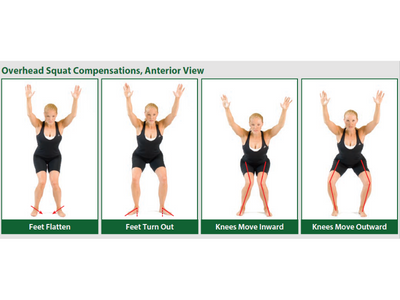
squat could look like this when observed from behind but you may not be able to
asymmetric squats
understand the faults. this fault is very common with individuals recovering from a knee injury or a knee surgery, so as an experienced physio I would advise you to get the assessment done for activating the correct neuromuscular pattern during the squat
Just one simple test of Over Head Squat Assessment (OHSA) can highlight the shortcomings in your form and help you perform better.
The ability to squat is essential in life whether you are a sports person or just a regular person. You need to squat for your daily activities right from the age of 2 to 80 years old. A lot of patients come to us not knowing how to squat because of lifestyle issues, on the other hand, a lot of sports players, who come in for treatments have shown asymmetrical strength and weaknesses, we could identify through this simple test to help then recover completely from their back/hip/knee/ankle injury.
When you are squatting, all the muscles in the linkage right from your toe to the spine to the shoulder and neck muscles must work in co-ordination and appropriately to produce an effective squat.
An OHSA requires you to perform squats for around 5-10 reps and the form of your squats are assessed through 3 different angles
if there are any faults in performing the squats, the same are identified and a correction program is made to help you perform better.
faulty squat pattern- front view
faulty squat pattern- side view
fill in the OHSA form and come over to get yourself corrected. if you cannot we can do this assessment
for you.
PS:- OHSA is not the only tool, it forms a part of a group of the examination for various musculoskeletal/sports injuries.