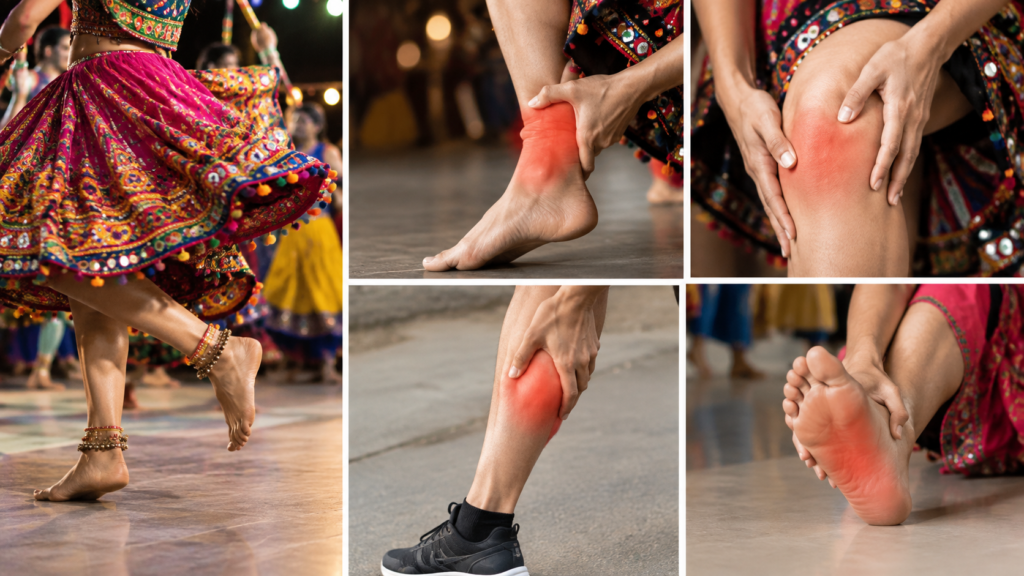
You survived three hours of Garba, nailed every twirl, matched the fastest beats and refused to sit out even one song. But the next morning? Your knees hurt on the stairs, your calves feel like stone, and that ankle is not quite happy with you.
Was it just a night of enthusiastic dancing—or is your body warning you about an injury?
Garba may look effortless when the music takes over, but your legs are working hard behind every step. Repeated footwork, sudden turns, hopping, pivoting and rapid changes in direction place considerable demands on your ankles, knees, calves and feet.
And when you combine these movements with hours of dancing, fatigue and inadequate recovery, your festive night can sometimes turn into an unwelcome visit to the physiotherapist.
Let’s look at the common leg injuries associated with Garba, how to recognise the warning signs, and when it’s time to seek professional help.
1. Ankle Sprains: One Wrong Step Can Change Your Night
Rapid turns, accidental foot contact with another dancer or landing awkwardly after a hop can cause the ankle to twist. This may stretch or tear the ligaments supporting the ankle joint, leading to pain, swelling and difficulty walking.
Don’t ignore a swollen ankle just because you can still walk. Continuing to dance on an injured ankle can aggravate the injury and delay recovery.
2. Knee Pain: When Repetitive Footwork Takes Its Toll
Garba involves repeated bending of the knees, pivoting on the feet and shifting body weight from side to side. When these movements are repeated for hours, especially without adequate conditioning, the knees may become painful.
People with existing kneecap-related pain may experience discomfort while bending, squatting or climbing stairs. Sudden twisting movements can also injure the meniscus or ligaments, particularly when the foot remains planted while the body turns.
Sharp pain, significant swelling, locking or a feeling that the knee is giving way deserves prompt medical assessment.
3. Calf Muscle Strains: The Morning-After Surprise
All those repeated steps, hops and push-offs place considerable demands on the calf muscles. If your muscles are not accustomed to this workload, you may develop soreness or, occasionally, a muscle strain.
Mild muscle soreness often settles with recovery. However, sudden, sharp calf pain or difficulty pushing off the foot could indicate an injury rather than ordinary post-dance soreness.
4. Foot Pain: Too Many Rounds, Too Little Recovery
The repetitive loading involved in Garba can aggravate conditions such as plantar heel pain or forefoot pain. Dancing for extended periods on hard surfaces or wearing poorly fitting footwear may increase discomfort.
Persistent, localised foot pain should not automatically be dismissed as tiredness. Stress injuries to the bones can also cause pain that worsens with weight-bearing and may require medical evaluation.
How Can You Reduce Your Risk of Injury?
A few simple precautions can make your Navratri more enjoyable:
- Warm up before dancing: Spend 5–10 minutes on brisk walking, ankle movements, calf raises and gentle dynamic leg movements.
- Build up gradually: Avoid jumping straight into several hours of dancing if you have been relatively inactive.
- Choose suitable footwear: Wear comfortable, well-fitting footwear appropriate for the dance surface.
- Take breaks: Fatigue can affect coordination and landing control. Rest when your legs begin to feel heavy.
- Respect pain: Do not push through sharp pain, increasing swelling or a limp just to complete another round.
When Should You Visit a Sports Physiotherapist?
Not every ache after Garba needs treatment. Mild, general muscle soreness often improves with rest and gentle movement. However, persistent pain, recurring ankle sprains, knee discomfort, reduced mobility or difficulty returning to your normal activities deserve attention.
A sports physiotherapist can assess your ankle, knee, foot, muscle strength, balance and movement control to help identify the factors contributing to your symptoms. Based on the findings, your rehabilitation may include mobility exercises, progressive strengthening, balance training and sport-specific movement drills.
If you have a significant injury, inability to bear weight, marked swelling or severe pain, seek prompt medical assessment rather than attempting to exercise through it.
At PHYSIOCURE: THE SPORTS REHAB CLINIC, Santacruz West, Mumbai, the goal is not simply to help you recover from pain, but to help you return to the activities you enjoy with better strength, control and confidence.
This Navratri, celebrate with all your energy—but give your legs the care they deserve. After all, the best Garba season is one you can enjoy without an injury putting the next round on hold!