

Who this is for: weekend warriors, club athletes, and competitive players in tennis, cricket, squash, badminton, football, and pickleball who want practical, safe, and evidence-backed ways to reduce pain and speed recovery.
How I built this: I prioritized high-quality systematic reviews and meta-analyses published in 2024–2025, plus recent clinical reviews. Each “hack” has a short explanation, the best evidence summary, and immediate practical steps you can use right away.
1) Smart Load Management & Graded Exercise (the foundation)
What it is (short): Instead of “push through pain,” use graded loading — progressive, sport-specific loading that restores tissue tolerance while avoiding overload.
Why it works (evidence): Recent meta-analyses and systematic reviews show exercise therapy and graded loading are the most consistent, effective interventions for musculoskeletal pain and tendinopathy outcomes (pain and function). Exercise-based programs improve long-term disability and pain compared with passive care or no treatment. (PubMed)
Practical steps (for athletes):
- For tendon pain (e.g., Achilles, patellar, lateral elbow): start with isometric holds (pain-controlling) then progress to eccentric/slow heavy loading per validated protocols; adjust dose by pain tolerance and function.
- Track loads (minutes, reps, sprint distance) and reduce volume by ~20–30% for 3–5 days after spikes in pain or training load.
- Use pain as a guide, not an absolute stop rule: mild-moderate pain (≤3/10) during exercise that settles within 24h is often acceptable; avoid increasing baseline pain over time.
Useful reads: systematic reviews on exercise therapy and tendinopathy protocols. (PubMed)
2) Tendinopathy — Dose the Loading (eccentric/isometric + progressive resistance)
What it is: Specific loading protocols (isometric, eccentric, then progressive high-load resistance) for tendon pain.
Evidence highlights: Multiple 2024–2025 analyses confirm exercise dosing matters — eccentric and heavy slow resistance protocols reduce pain and improve function for many tendinopathies; dose components (load, volume, tempo) influence outcomes. Some comparative reviews show mixed ranking by outcome, but consensus favors progressive heavy loading. (British Journal of Sports Medicine)
Sport notes: Tennis/shot-put/cricket bowlers (shoulder/epicondyle) and badminton (Achilles or patellar) respond well to tailored tendon loading programs integrated with technical and on-court conditioning.
Quick plan (clinic → home):
- Week 1: pain-controlling isometrics (5 x 45–60s, 1–2×/day)
- Week 2–3: eccentric-focused loading (3 sets × 15 reps, slow 3–4s lowering)
- Weeks 4+: progressive heavy slow resistance (3 sets × 6–8 reps, heavier, slower tempo)
Sources: clinical review + meta-analyses on tendon loading. (British Journal of Sports Medicine)
3) Blood Flow Restriction (BFR) Training — low load, big effect
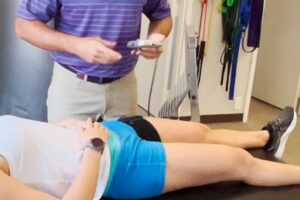
What it is: Training with a cuff that partially restricts venous return to muscle so very low loads produce hypertrophy and strength improvements.
Evidence highlights: Recent 2024–2025 meta-analyses show LL-BFR and HL-BFR can reduce joint pain during rehab and produce strength gains comparable to high-load training — useful when heavy loading is temporarily contraindicated (e.g., early rehab or painful joints). There’s growing high-quality evidence showing short-term pain reductions when combined with low-load exercise. (PMC)
Safety & practical notes:
- Use licensed cuffs or BFR devices and follow pressure guidelines (individualized cuff pressure is safer).
- Typical programs: low load (20–30% 1RM), 4 sets (30/15/15/15 reps), 2–3×/week.
- Ideal for recovering athletes who need strength without high mechanical joint stress.
Key reads: meta-analyses and reviews on BFR effects on pain and strength. (PMC)
4) Sleep & Pain: optimize sleep to reduce pain sensitivity and injury risk

What it is: Prioritize consistent, sufficient sleep (7–9 hours) and sleep hygiene.
Evidence highlights: Recent narrative reviews and meta-analyses show poor sleep worsens pain perception, impairs recovery, and increases injury risk. Sleep optimization improves recovery markers and reduces susceptibility to pain amplification. (PMC)
Practical sleep hacks:
- Set consistent sleep/wake times across the week.
- Avoid heavy training 1–2 hours before bedtime; if late sessions are needed, use cool-down routines to downregulate arousal.
- Short naps (20–30 min) can help during heavy training periods but avoid long late naps that impair night sleep.
Read more: impact of sleep on athletes and performance. (PMC)
5) Nutrition & Supplements — omega-3s and anti-inflammatory diet

What it is: Diets and targeted supplements to support inflammation resolution and muscle recovery.
Evidence highlights: Reviews 2023–2025 suggest omega-3 supplementation (EPA/DHA) can attenuate biomarkers of muscle damage and may reduce delayed onset muscle soreness (DOMS) and post-exercise inflammation in some studies — not a magic bullet, but useful adjunct when combined with other strategies. Balanced protein intake and anti-oxidant-rich foods are also supportive. (PMC)
Practical guidance:
- Aim for 1.2–2.0 g/kg protein/day for most athletes (spread across meals).
- Omega-3 dosing used in trials: 1–4 g combined EPA+DHA daily for several weeks — check with a sports doc if on blood thinners.
- Emphasize whole foods (lean proteins, oily fish, fruits, veg, whole grains).
Sources: systematic reviews on omega-3s and exercise-induced muscle damage. (PMC)
6) Cold Therapy & Hydrotherapy — when to use it (and when not to)
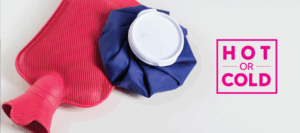
What it is: Cold water immersion (CWI), whole-body cryotherapy, contrast water therapy to reduce DOMS and perceived soreness.
Evidence highlights: Network meta-analyses and reviews (2023–2025) show CWI (10–15 minutes, ~11–15°C) is effective for reducing DOMS and subjective soreness, and whole-body cryotherapy may help neuromuscular recovery. However, immediate post-exercise cold may blunt hypertrophy signaling if used chronically around strength training — so match modality to the goal (recover faster vs stimulate adaptation). (PMC)
Practical rules:
- For tournament play or quick repeat sessions: use CWI (10–15 min at 11–15°C) to reduce soreness and improve short-term recovery.
- During a hypertrophy/strength block where adaptation is the goal, avoid routine immediate cold after heavy lifting sessions.
- Contrast therapy or active recovery (easy cycling) are alternatives for circulation and comfort.
Sources: meta-analyses on CWI and cryotherapy. (PMC)
7) Topical Analgesics & Judicious NSAID Use
What it is: Use topical NSAIDs/gels for localized pain and reserve systemic NSAIDs sparingly.
Evidence highlights: Reviews and guidelines show topical NSAIDs provide local pain relief with fewer systemic side effects and faster onset for acute musculoskeletal pain compared to placebo. Systemic NSAIDs can be useful short-term but may have side effects and potentially interfere with tissue healing if used long-term. (PMC)
Practical tips:
- Try topical NSAID (e.g., diclofenac/ketoprofen gel) for localized joint/muscle pain before systemic agents.
- Limit systemic NSAID use (oral) to short windows and under medical advice, especially in athletes with repeated use.
- Always consider anti-inflammatory strategies (sleep, load modification, nutrition) alongside medication.
Sources: clinical guidelines and meta-analyses on topical NSAIDs. (PMC)
8) Dry Needling & Manual Therapy — adjuncts, not stand-alone cures
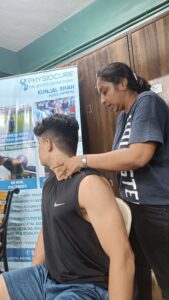
What it is: Dry needling (DN) for myofascial trigger points, kinesio taping, cupping, electrotherapy and manual therapy (mobilization) to reduce pain and improve function short-term.
Evidence highlights: Recent systematic reviews/meta-analyses (2024–2025) show dry needling can reduce pain and improve pressure-pain thresholds for some conditions (e.g., neck pain, myofascial pain). It’s most effective as an adjunct to exercise and rehab, rather than as a single long-term solution. (PMC)
How to use it (clinically):
- Use DN to reduce pain and allow better participation in active rehab — combine with movement retraining and progressive loading.
- Explain expected effects: pain reduction might be immediate but typically short-to-medium term; follow-up with strengthening/movement programs to build durable change.
Sources: recent reviews on dry needling and manual therapy. (PMC)

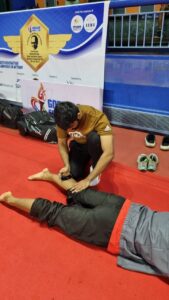
9) Neuromuscular Control & Movement Retraining (injury prevention + pain reduction)
What it is: Targeted neuromuscular training (balance, plyometrics, hip/core control, deceleration mechanics) and integrative warm-ups.
Evidence highlights: Meta-analyses demonstrate neuromuscular training programs (NMT) reduce injury rates and improve functional outcomes in team and racket sports; they also help correct movement patterns that perpetuate pain. Integrating neuromuscular training into warm-ups reduces injury risk substantially. (British Journal of Sports Medicine)
Sport-specific examples:
- Tennis/pickleball: shoulder and trunk control drills, deceleration training for serves.
- Cricket: hip/core capacity for bowlers and batters to reduce lumbar and shoulder load.
- Football: NMT warm-up (single-leg balance, hop-to-land training, eccentric hamstring work).
Practical plan: 10–15 min daily or pre-training NMT warm-up (injury-prevention-style) 3×/week; supplement with progressive loading sessions.
Sources: NMT meta-analyses and systematic reviews. (British Journal of Sports Medicine)
10) Psychological Skills (mindfulness/CBT) & Pain Education
What it is: Use pain education, mindfulness, and CBT tools to reduce pain catastrophizing and to improve coping and adherence.
Evidence highlights: Recent meta-analyses show mindfulness-based interventions improve psychological outcomes and performance in athletes; cognitive behavioural approaches reduce pain and disability in musculoskeletal pain cohorts and help adherence to rehab. Combining physical and psychological approaches yields better outcomes than either alone. (Frontiers)
Practical steps:
- Pain education: brief, clinic-friendly explanation that pain ≠ tissue doom; set realistic recovery timelines.
- 5–10 min daily mindfulness or focused breathing can reduce anxiety and perceived pain during rehabilitation.
- Use brief CBT strategies for adherence and to reframe fear-avoidance beliefs (graded exposure).
Sources: meta-analyses/reviews on mindfulness and CBT in athletes and pain. (Frontiers)
Putting the 10 hacks together — a sample 7-day micro-protocol for weekend athletes (practical)
This is a short template a club player might use in the week following a painful weekend match (e.g., groin/hamstring or shoulder ache):
Day 1–2: reduce load (cut intensity by 30%), gentle mobility, isometric holds for problematic tendon/area, topical NSAID PRN. Use CWI after acute heavy soreness if you need to play again soon. Sleep focus, 20–30 min midday nap if needed.
Day 3–5: progressive loading (isometrics → eccentric/slow heavy resistance depending on tissue), 2×/week BFR session if joint pain limits load, NMT warm-up before practice. Mindfulness/CBT 5–10 min daily.
Day 6–7: return to sport-specific skill practice, monitor pain (no progressive worsening of baseline pain). Use topical analgesics post-session or CWI if immediate recovery needed.
(Adjust the protocol per tissue: tendon vs muscle vs joint — earlier eccentric for tendinopathy, more neuromuscular control for joint issues.)
Sport-specific pearls (tennis, cricket, badminton, squash, football, pickleball)
- Tennis / Badminton / Squash / Pickleball (high-velocity shoulder/elbow): prioritize scapular stability, trunk rotation control, eccentric shoulder external rotator strength and tendon loading programs for lateral elbow or rotator cuff tendinopathy. Combine DN/manipulative therapy only to facilitate better participation in loading. (British Journal of Sports Medicine)
- Cricket (bowlers & batters): focus on lumbopelvic control, graded bowling loads (overs) and planned ramp-ups; sleep and load tracking are huge for reducing recurrence. (PMC)
- Football: NMT warm-ups reduce injury rates — include eccentric hamstring strengthening, landing mechanics and movement control. (British Journal of Sports Medicine)
Limitations, cautions & clinical red flags
- The best effects come from multimodal approaches (exercise + education + targeted adjuncts). No single “hack” is a cure. (PubMed)
- Many 2024–2025 trials still have heterogeneity in protocols and participant groups; individualization matters.
- If you have neurological signs (numbness, progressive weakness), unexplained swelling, systemic symptoms or severe night pain — see a clinician urgently.
Selected key research links (2024–2025) — one citation list per hack (click the links in the original transcript)
- Exercise therapy & graded loading for pain/tendinopathy — Gonzalez-Gomez et al. meta-analysis (2025); reviews on exercise therapy. (PubMed)
- Tendon loading / eccentric & heavy slow resistance — BJSportMed clinical review & systematic reviews 2024–2025. (British Journal of Sports Medicine)
- Blood Flow Restriction (BFR) — Lin et al. (2025), Zeitlin (2025), Frontiers meta-analysis (2025). (PMC)
- Sleep & recovery — Narrative reviews and sleep effect studies (2024). (PMC)
- Omega-3 & nutrition — Fernandez-Lázaro (2024), MDPI review (2024), RCTs 2025. (PMC)
- Cold/Cryotherapy/CWI — Network meta-analyses and reviews (2023–2025). (PMC)
- Topical NSAIDs — Multidisciplinary guidelines & reviews (2023–2025). (PMC)
- Dry needling & manual therapy — Recent systematic reviews and neuophysiological analyses (2024–2025). (PMC)
- Neuromuscular training & injury prevention — BJSM and JOSPT meta-analyses (2024–2025). (British Journal of Sports Medicine)
- Mindfulness/CBT — Frontiers/BMJ/meta-analyses 2024–2025 on MBIs & CBT in athletes/pain. (Frontiers)

