Tag: running

  • How To Deal With Ankle Sprains ?

    What is an ankle sprain?
    An ankle sprain happens when your foot suddenly twists and stretches the strong bands (ligaments) that support your ankle beyond their limit. This usually affects the ligaments on the outer side of the ankle, causing pain, swelling, bruising and difficulty putting weight on the foot. Ankle sprains are extremely common in everyday life and in sports like marathon running, cricket, squash, tennis and dance.​

    How does an ankle sprain happen in daily life?

    In non‑athletes, ankle sprains often happen during simple day‑to‑day activities. Typical examples include missing a step on the staircase, slipping off the edge of a pavement, walking on uneven ground or stepping into a small pothole or gap. The foot rolls inwards, the ankle rolls outwards, and the ligaments on the outside of the ankle get overstretched or torn.​

    Sport‑specific mechanisms of injury

    In sport, the same basic twist happens, but often at higher speed and force:

    • Marathon runners: Fatigue, uneven roads, potholes and sudden changes in direction at aid stations can cause the foot to roll inwards during landing or push‑off, especially when the runner is tired late in the race.​

    • Cricketers: Bowlers and fielders are at risk when sprinting, cutting, turning quickly to chase the ball, or landing awkwardly from a jump or dive; landing on an uneven patch or another player’s foot is a common trigger.​

    • Squash, tennis and other racquet sports: Fast side‑steps, sudden stops, split‑steps and landing on an opponent’s or partner’s foot can all cause the ankle to roll sharply inwards. Video studies in court sports show many sprains happen when landing from a jump or changing direction with the foot fixed to the floor.​

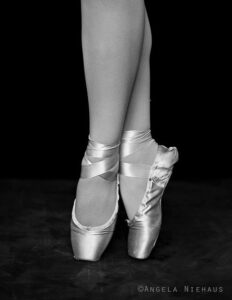
    • Dancers: Repeated jumps, turns and work on demi‑pointe/pointe put the ankle at risk when landing poorly, losing balance in turnout or rolling over the foot at the end of a jump

      In all of these, the common pattern is a sudden inward twist of the foot with the body weight moving over it too fast for the muscles to protect the ligaments.​

      What is a chronic ankle sprain?

      Sometimes the ankle never fully recovers from the first sprain, or it keeps getting sprained again and again. This is often called a “chronic ankle sprain” or “chronic ankle instability.” It means the ligaments and supporting muscles are no longer giving the joint the firm support and balance it needs, especially during quick or unpredictable movements.​

      Typical symptoms of chronic ankle problems include:
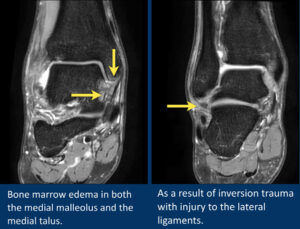
      • Repeated “giving way” or rolling of the ankle on uneven ground or during sport

      • A constant feeling of weakness or wobbliness in the ankle

      • Swelling or ache after walking, running, training or dancing

      • Stiffness or tightness, especially in the morning or after sitting

      • Fear or lack of confidence while running, jumping or changing direction

      Chronic ankle issues do not usually improve with rest alone. Without proper sports physiotherapy and ankle sprain rehab exercises, they can lead to more sprains, early joint wear‑and‑tear and ongoing pain.​

    Key sports physiotherapy principles :-


    After an ankle sprain, the goal is not to just “rest it” but to protect it briefly, control the swelling, and then start gentle, pain‑free movement as soon as it is safe. This early movement and gradual loading help the ligaments heal stronger and reduce stiffness.
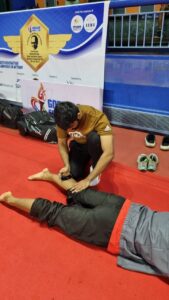
    As the pain settles, the focus shifts to building strength, balance and coordination around the ankle, often using a brace or taping for extra support while you move and train. These exercises train the muscles and nerves to react quickly again, which lowers the chance of the ankle rolling over in the future.

    Instead of clearing you to play simply after a set number of days, your rehab should follow clear stages, from light everyday activity to full training and competition. At each stage your physiotherapist checks whether your strength, balance, hopping and sport‑specific skills match the other leg, and only then moves you to the next level or back to sport

    Sports‑specific biomechanics and pathomechanics

    • Marathon runners: Repetitive loading at mid‑stance and push‑off demands optimal dorsiflexion, elastic calf function and dynamic peroneal stability; limited dorsiflexion and poor neuromuscular control increase re‑injury risk, even when gross running gait looks “normal.”frontiersin+1
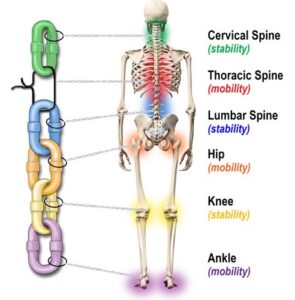
    • Cricketers: Bowlers and fielders experience high inversion moments during cutting, landing and boundary stops; lateral instability alters kinetic chain alignment, affecting knee, hip and lumbar mechanics during bowling and throwing.pmc.ncbi.nlm.nih+1
    • Squash/tennis/racquet sports: Multi‑directional lunges, split‑steps and rapid deceleration place high demand on frontal‑plane control; impaired proprioception and peroneal latency compromise change‑of‑direction mechanics and increase risk in side‑stepping and cross‑over steps.sciencedirect+1
    • Dancers: Repeated demi‑pointe, jumps and landings require end‑range plantarflexion control; lateral ligament injury disrupts alignment in turnout, landing mechanics and pointe control, increasing risk of chronic instability.pmc.ncbi.nlm.nih+1

    Acute vs chronic ankle sprain

    • Acute ankle sprain
      This is a “fresh” injury that has just happened, usually within the last few days or weeks.
      The main features are sudden pain, swelling, bruising and difficulty walking after you twist or roll your ankle. The focus here is ruling out a fracture, calming pain and swelling, and then starting early, guided rehab so it heals well.

    • Chronic ankle sprain / chronic ankle instability
      This refers to ankle problems that keep going for months, or repeated sprains over time.
      People often describe the ankle as weak, wobbly or “giving way,” especially on uneven ground or during sport. There may be on‑and‑off swelling or aching after activity, and confidence in the ankle is usually low. Chronic cases need a full strengthening and balance programme, sometimes extra bracing, and occasionally surgical opinion if rehab alone is not enough.

    Grading of acute ankle sprains (Grade I–III)

    Most research and clinical guidelines still use a three‑grade system to describe how badly the ligaments are hurt:
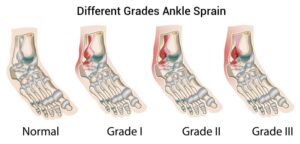
    • Grade I (mild)
      The ligaments are stretched but not torn.
      There is mild pain and swelling, but you can usually walk with only slight discomfort. Recovery is often quick with proper care.

    • Grade II (moderate)
      Some of the ligament fibres are torn.
      Pain, swelling and bruising are more obvious, walking is painful and the ankle may feel a bit unstable. Rehab takes longer and needs structured physiotherapy to fully restore strength and balance.

    • Grade III (severe)
      The ligament is completely torn, and sometimes more than one ligament is involved.
      There is significant pain, swelling and bruising, weight‑bearing is very difficult, and the ankle feels very unstable. Recovery is longer, and in some cases a specialist may discuss more intensive treatment or, rarely, surgery, along with a long, detailed rehab plan.

    Management of ankle sprains:-


    “Treatment is planned according to how new the sprain is and how badly the ligament is damaged, rather than using a ‘one size fits all’ approach.”


    Type / Grade What it means (simple) Main goals of treatment Typical support & activity level
    Acute – Grade I (mild) Ligament is stretched but not torn; mild pain and swelling; you can usually walk with some discomfort. Calm pain and swelling quickly, protect the ankle briefly, then start gentle movement and gradual loading so it does not get stiff or weak. Short period of protection (brace/taping), home care for swelling, early comfortable movement, then gradual return to walking, daily tasks and light sport.
    Acute – Grade II (moderate) Some fibres of the ligament are torn; more pain, swelling and bruising; walking is painful and ankle may feel a bit unstable. Protect the joint while it settles, then carefully restore full movement, strength and balance so the ankle feels stable again. Stronger external support (brace/taping, sometimes crutches for a few days), clinic‑based rehab, step‑by‑step return from daily activities to jogging and then sport, usually over several weeks.
    Acute – Grade III (severe) Ligament is completely torn (often more than one); marked swelling and bruising; very hard to put weight on the foot. Give the ligament time to heal in a protected position, then follow a long, structured rehabilitation plan to regain movement, strength, balance and confidence. Firm support (boot or rigid brace) and reduced weight‑bearing at first, followed by closely supervised rehab; gradual return to normal walking, then sports; sometimes a specialist opinion if the ankle stays very unstable.
    Chronic ankle sprain / chronic instability Ankle feels weak or “keeps rolling” months after the first injury, or there are repeated sprains. Improve long‑term stability, reduce “giving way,” and prevent further sprains by training the muscles, balance and control around the ankle. Detailed assessment, longer rehab programme focusing on stability and control, possible regular use of brace/taping for higher‑risk activities, and ongoing “maintenance” exercises to keep the ankle strong.

    Sport‑specific rehab and return‑to‑play

    Sport Rehabilitation Focus Return-to-Play Principles
    Marathon Runners Early gradual return to running, progressive walking to jogging, strength building for calf muscles, improved balance and coordination to support running mechanics even if gait looks normal Gradual increase in running load and pace, ensuring pain‑free movement and stability in running pattern before full return
    Cricketers Phased running drills starting with straight-line running progressing to curves, cutting, sliding, and landing; strengthening of trunk and hips to support complex movements like bowling and fielding Systematic progression through cricket-specific movement patterns, working towards full bowling and fielding actions under supervision
    Racquet Sports (Squash, Tennis, etc.) Focus on single-leg strength, lateral balance and agility, multi-directional movement drills including split steps and lunges tailored to court demands Increasing intensity of court-specific drills and match-like movements only after achieving adequate strength, balance, and control
    Dancers Gradual progression from controlled barre work to centre stage, enhancing single-leg endurance, landing control, and supporting complex turns and jumps Slowly advancing to full choreography and performance, often with external support (like taping) during early return phase to reduce risk of recurrence
    All Sports Supervised physiotherapy focusing on neuromuscular training and proprioception (body awareness), with clear, objective criteria to measure progress before returning to sport Phased rehabilitation models emphasizing return to activity, sport, play, and competition steps using strength, balance, hop, and sport-specific functional tests

    References:-

    1. https://pmc.ncbi.nlm.nih.gov/articles/PMC164373/
    2. https://www.massgeneral.org/assets/mgh/pdf/orthopaedics/sports-medicine/physical-therapy/rehabilitation-protocol-for-ankle-sprain.pdf
    3. https://www.sanfordhealth.org/-/media/org/files/medical-professionals/resources-and-education/014000-01095-flyer-ankle-sprain-rehabilitation-pt-guideline.pdf
    4. https://patialaheart.com/blog/ankle-sprains-diagnosis-treatment-and-rehabilitation-for-athletes/
    5. https://www.physio-pedia.com/Ankle_Sprain
    6. https://ijspt.org/wp-content/uploads/2024/06/8-Flore.pdf
    7. https://www.massgeneral.org/assets/mgh/pdf/orthopaedics/foot-ankle/pt-guidelines-for-ankle-sprain.pdf
    8. https://www.narayanahealth.org/blog/rehabilitation-for-ankle-sprains-everything-you-need-to-know
    9. https://www.orthobullets.com/foot-and-ankle/7028/ankle-sprain
    10. https://orthoinfo.aaos.org/en/recovery/foot-and-ankle-conditioning-program/
    11. https://www.aafp.org/pubs/afp/issues/2001/0101/p93.html
    12. https://emedicine.medscape.com/article/1907229-treatment
    13. https://www.orthobullets.com/foot-and-ankle/7028/ankle-sprain
    14. https://www.nata.org/sites/default/files/2025-08/ankle-sprains.pdf
    15. https://www.europeanreview.org/wp/wp-content/uploads/1876-1884.pdf
    16. https://www.frontiersin.org/journals/medicine/articles/10.3389/fmed.2022.868474/full

  • Sports Physiotherapy: Why Modern Athletes Are Choosing Evidence-Based Rehab

    If you play a sport — whether it’s Cricket at Juhu Beach or Balkanji bari turf or at MIG Cricket Club in Bandra East, Badminton at Willingdon Gymkhana or in Prabodhankar Thackeray Krida Sankul for Pickle ball, football turf sessions at TurfPark | St Andrews, or Early-morning Marathon training at Carter Road or with STriders or mUmbai runners— chances are your body is dealing with far more load, impact and repetition than you realise.

    And with increasing sports participation in Mumbai, sports injuries are becoming extremely common:
    knee pain while running, shoulder pain while smashing a shuttle, ankle sprains while playing football, lower-back stiffness from gym training.

    This is exactly where sports physiotherapy makes the difference.


    Why Sports Physiotherapy Is Not the Same as General Physiotherapy

    A lot of people still believe physiotherapy is only for pain relief.
    But sports physiotherapy works differently — it focuses on movement, muscle coordination, sport-specific loading, and performance.

    Unlike general physiotherapy, sports physio looks at:

    • What movement pattern caused the injury

    • How your biomechanics affect performance

    • What strength or mobility deficits created overload

    • Whether you are loading too much, too soon

    • How to return you to sport safely

    Most of the times I have noticed atheletes or weekend warriors playing with injuries. they just dont feel like/ dont want o/ dont have time to get it assesed. many a times they visit the medical doctors take basic meds and dont adress it completely and then once the tournament or pain has subsided they dorectly hit the gym and expect gym trainers to do the therapy they should have gone to in the first place.

    A sports physiotherapist bridges that gap by keeping training:

    ✅ Safer
    ✅ Smarter
    ✅ Stronger
    ✅ More sustainable


    Most Common Sports Injuries Seen in Mumbai Athletes (2025 Trends)

    Across clinics in Santacruz, Juhu, Bandra and Andheri, the most common injuries reported by athletes today include:

    1️⃣ Knee pain in runners

    • IT Band syndrome

    • Runner’s knee

    • Patellar tendinopathy

    2️⃣ Shoulder injuries in badminton & tennis players

    • Rotator cuff irritation

    • Shoulder impingement

    • Scapular muscle weakness

    3️⃣ Ankle sprains in footballers & recreational athletes

    • Lateral ligament sprains

    • Balance/proprioception deficits

    4️⃣ Tendon injuries in gym-goers

    • Biceps tendinopathy

    • Achilles overload

    • Elbow tendon pain

    5️⃣ Lower-back tension due to poor mobility

    Especially in cricketers (fast bowlers) and people doing heavy lifts.

    The trend across all areas?
    Most injuries are preventable with early load management, movement correction and sport-specific rehab.


    What a Sports Physiotherapist Actually Does (Beyond Pain Relief)

    A modern sports physio today uses an integrated approach:

    https://www.instagram.com/physiocure_sportsrehabclinic/reel/DGnJ-BAM54P/

    ✔ Movement Screening

    To analyse running form, jumping mechanics, landing technique, racket swing pattern, treadmill gait, etc.

    ✔ Manual Therapy

    Soft-tissue release, joint mobilizations, and myofascial techniques to restore mobility.

    ✔ Strength & Conditioning

    Structured progression for:

    • Strength

    • Mobility

    • Power

    • Agility

    • Endurance

    starting 2025 we conduct only strengthe and conditioning classes at Physiocure. we conduct Mat Pilates on monday, wednesday and fridays and we conduct align and activate posture fitness class on tuesdays and thursdays. you can call us for further details.

    ✔ Sport-Specific Rehab

    Every sport in Santacruz/Bandra/Juhu has unique demands:

    Cricket: rotational core strength, shoulder integrity
    Badminton/Tennis: upper-body control, footwork mechanics
    Running: lower-limb load tolerance, hip stability
    Football: agility, ankle stability, hamstring strength

    ✔ Return-to-Sport Testing

    A critical but often ignored step that prevents re-injury.

    Hop tests, gait analysis, Y-balance tests, sprint tests — depending on the sport.


    Why Athletes from Santacruz, Bandra & Juhu Actively Seek  Affordable Sports Physiotherapy Today

    1. Turf culture

    Football turfs across Santacruz & Bandra have exploded in popularity, increasing high-speed injuries. we can help turf footballers continue playing while we help them recover through sports injuries smoothly

    2. Running communities

    Running clubs like Striders, Bombay running, Nike running club, Mumabi Road Runners, Asics Runners club and self practicing runners around bandra, Khar, santacruz dont know that we run a runner specific injury prevention prorgram. we also do Normatech leg recovery sessions for post marathon or on regular trainig days and help with all kinds of running injuries.

    3. Fitness studio boom

    witht he changing trends some really cool multifunction gyms like FLOFIT BOX  in Bandra and MMA Matrix centre in Khar/ sanatcruz linking road and some really cool gyms around sanatcruz like Fitness First, dessus fitness , Transform gyms and some yoga centres like the body temple yoga, we definetly know people here like to go to the fitness centres and many a time they may need a sports physio for them to address the aches and niggles. we are happy to serve all kinds of fitness freaks so they continue their fitness journery pain free.

    4. Competitive amateur athletes

    Badminton players, tennis enthusiasts and cyclists train hard but recover poorly — leading to breakdown.

    5. Early rehab awareness

    People now realise physio is not last-minute treatment — it’s performance enhancement.


    2025 Insights: What The Latest Research Says

    Sports physiotherapy worldwide is shifting to:

    📌 Load-based tendon rehab (not rest)

    Achilles, patellar & shoulder tendons heal through progressive loading — not through avoiding activity.

    📌 Strong evidence for isometrics + eccentrics

    Particularly in runners and racket-sport players.

    📌 Mobility + control > flexibility alone

    High-performing athletes don’t just stretch — they stabilise.

    📌 Strength symmetry before return-to-sport

    Especially after ACL and ankle injuries.

    📌 Train the movement, not the muscle

    Sport-specific rehab gives faster results than isolated strengthening.


    Sports We Commonly Work With (Based on Real Clinic Cases & Field Trends)

    From everyday athletes to competitive players, sports physio in Santacruz commonly manages:

    🏸 Badminton

    Shoulder overload, knee pain, plantar pain, elbow strain.

    🏃 Running / Marathon Prep

    ITB pain, Achilles tendinopathy, shin splints, calf tightness.

    🏏 Cricket

    Lower-back stress, shoulder issues, hamstring pulls.

    Football

    Ankle sprains, groin strain, hamstring imbalance.

    🏋 Gym / Strength Training

    Lifting injuries, mobility deficits, core weakness.

    🎾 Tennis

    Elbow tendon pain, shoulder dysfunctions, wrist loading issues.


    How to Choose the Right Sports Physiotherapist in Santacruz / Juhu / Bandra

    Before starting rehab, ensure your physio:

    ✔ Understands sport-specific biomechanics
    ✔ Offers structured progression plans
    ✔ Uses objective testing (strength & functional)
    ✔ Treats the root cause, not just the symptoms
    ✔ Blends manual therapy + strengthening + movement retraining

    A good sports physio is not someone who gives only massage or only exercises —
    but someone who can combine science, coaching and clinical expertise.


    Final Thoughts

    Sports physiotherapy is no longer limited to elite athletes — it is essential for anyone active in today’s high-demand fitness culture.

    Whether you’re a:

    • Runner at Juhu Beach

    • Cricketer in Santacruz

    • Badminton player in Bandra

    • Footballer at Carter Road

    • Gym enthusiast training in Khar

    …your body deserves the same level of care that professional athletes receive.

    Your performance, recovery, and longevity in sport depend on how well you move — and how smartly you train.

  • Running

    Running is one of the most popular sports in the world. This not only covers marathons and track and field running – running is also part of the training in virtually all other sports, including soccer, rugby, handball and triathlon. Modified levels and intensities of running can also be used as alternative training for most athletes with certain types of injuries

    Running is a very efficient method for maintaining or improving overall fitness and increasing the structural strength of the leg muscles. Running can be over a distance, in a variety of intervals or as a varied running-jogging-walking program. The intensity and the distance must be proportionate to the runner’s ability and objectives.

    Running on a hard surface

    However,before running on a hard surface, such as roads or astro turf, the runner must be able to withstand the repetitive impact of the ground on to the legs, as each stride will create an impact force of five to ten times body weight for a fraction of a second. Since each stride stresses the same structures, their tensile strength and endurance lie between positive training effects and injury.

    Running on a hard surface mainly loads the lower limbs, where 90 per cent of running injuries are found. The most common error an inexperienced runner makes is to run too fast and too long too early, so that training causes new injuries instead of promoting the healing of another.

    Prescribing hard surface running

    It is important to use common sense when prescribing hard-surface running. For an inexperienced runner the safest way to build up performance after an injury is a slow and steady running tempo,
    including a proper warm-up. The best test of improvement in running capacity is repeatedly to measure the runner’s effort and time in a simple test race.

    Running for general fitness

    For a fairly unfit but otherwise healthy person who wants to improve their general fitness and aerobic performance, running can be recommended as part of a progressive program. From a reasonable starting point, such a program would usually increase less than 15 per cent in distance and intensity per year.

    When to stop/reduce running on a hard surface!!

    • An elite marathon runner with an over-use injury may simply reduce their running time from two hours to one hour per day; not pushing over the pain threshold but gradually increasing the time day by day.
    • A 130 kg rugby player, even though extremely fit, is not a good candidate for long-distance or road running. Their knees will undoubtedly say ‘no!’ to this madness.
    • This type of exercise also cannot be recommended for obese or generally unfit recreational athletes or people with structural knee or hip problems, such as osteoarthritis.


    How do you know your running capacity is decent!!

    A reasonable running tempo that can be maintained for 30 minutes is essential for a persistent training effect. Runners should aim for a pace at which they can chat with a running mate while breathing almost normally; this is equivalent to 60 to 70 per cent of maximum aerobic capacity.

    The subjective experience of running is far more important than the heart frequency, which is not directly proportionate to the runner’s feeling. Even with the same heart frequency, for example 160 beats per minute, running can be very easy one day and very uncomfortable the next.

    Training to run efficiently

    The subjective experience of training is very important for a non-runner’s motivation. Since the surface is consistent for each stride the same structures in the lower limbs will be put under repeated stress. While this leads to a functional adaption of the strength of the structures it can also lead to
    injuries in the short term.

    The comfortable fitting shoe for running

    This also highlights the importance of proper, comfortably fitting of The Running Shoe with a cushioned sole, which can reduce the impact from touchdown in the stride, distribute the forces and provide stability to the ankle and foot.


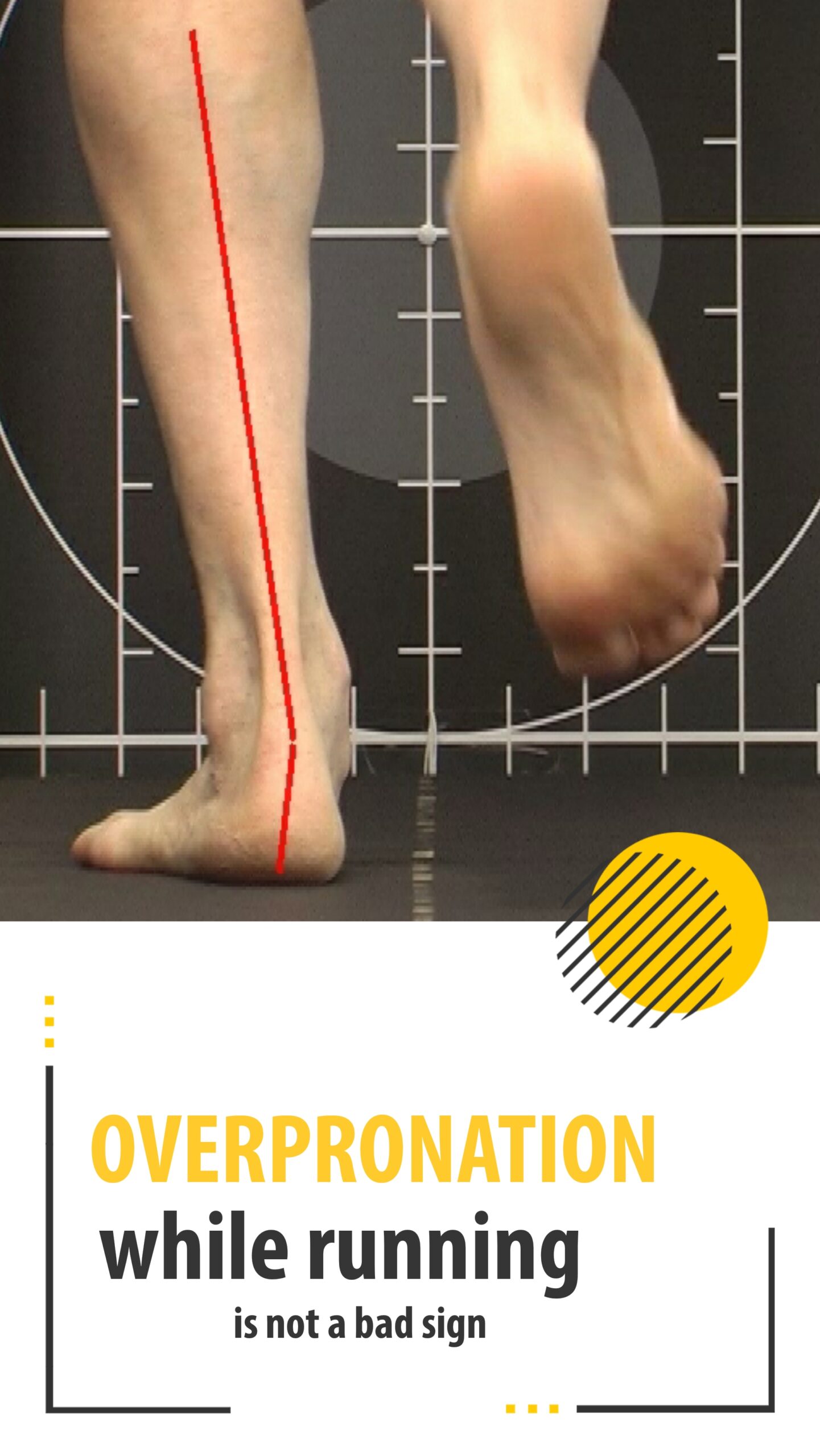
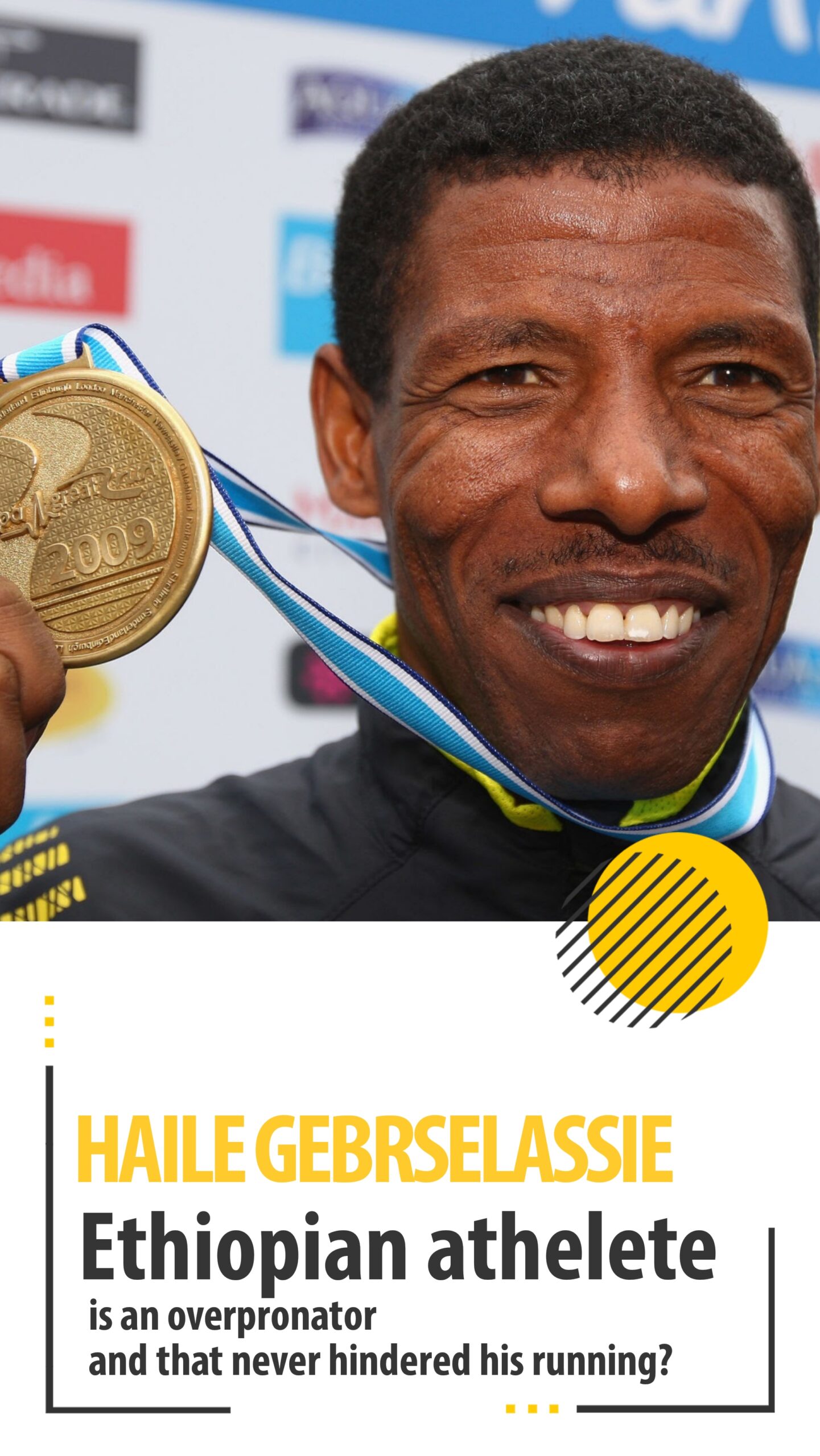
    overpronation is normalmarketing strategyEthopian athlete


    Regular runners will soon find their own style, but might have more trouble getting a consistent style of footwear. Most running injuries are caused by training errors.

    We usually recomment these ankle mobility exercises for runners training for a marathon

    Don’t get carried away!!

    The commercial running shoe market is unfortunately mainly fashion-orientated and new models are pumped out every six months. Despite improved bio mechanical knowledge, which manufacturers claim has revolutionized the market, and lighter high-quality materials and technology within the sole to compensate for different individual factors, modern running shoes do not last long. It may also be questioned whether they have reduced the incidence of injuries.

    Soft Surface Running

    Running on soft surfaces maintains or increases fitness and tensile strength of the lower limbs and with less eccentric impact compared to running on hard surfaces. A well-balanced running programme over beachess, in parklands or in forests can be recommended as a primary alternative
    training for most runners and other athletes with over-use injuries, even those of the lower limbs.

    People with mild or moderate knee or hip osteo-arthritis, who struggle to run 500 m on the road, may be able to jog a 5 km orienteering course without adverse effects.

    people with knee or hip arthritis must do these stretches before going for the run

    Advantages of soft surface running

    • A varied and soft running surface creates a lower impact on the musculo-skeletal system, due to the longer time for shock absorption from each stride and the wider distribution of forces over the kinetic chain.
    • On the other hand, the runner is forced to work harder, from a muscular point of view; they need to lift the knees higher when running uphill or over obstacles on the ground like vegetation.
    • This consumes more energy and, all in all, uses more muscle groups than running on hard surfaces.
    • Running in forests consumes up to twice as much energy per kilometer as road running.
    • Running on soft surfaces is less demanding for the lower limbs but, due to the increased energy demand, puts more stress on the cardiovascular and respiratory system and so is good for weight reduction and general fitness.

    Risks of soft surface running!!

    • There are risks in the prescription of this type of training. Over uneven terrain, the risk of ankle sprains and falls increases.
    • Even though temporarily running on soft surfaces can be recommended for a marathon runner with over-use injuries of the lower limbs, they must be aware of the increased risks.
    • Proprioceptive ankle training and core stability training must accompany alterations in running type.


    Who should avoid running on soft surfaces

    Older athletes, or fragile patients with osteoporosis or disabling injuries, may jog or walk on softer surfaces instead of running

    Last but not the least if you are into running you must follow these three stretches everyday to prevent yourself from injuries.

  • Acute Injury Management

    Musculoskeletal or sports injuries are injuries that happen when playing sports or exercising.

    There are two kinds of injuries:

    acute injury mgmt

    • Chronic injuries happen after you play a sport or exercise for a long time.

    The first 24-48 hours after sustaining a soft tissue injury are crucial in ensuring the best outcome for healing.  As a general rule, management for most injuries is as simple as remembering two simple acronyms – RICER and HARM.

    The objective of RICE is to stop the injury-induced bleeding into the muscle tissue and thereby minimize the extent of the injury. Clinical examination should be carried out immediately after the injury and 5-7 days after the initial trauma, at which point the severity of the injury can be assessed more reliably.

    Use RICER!

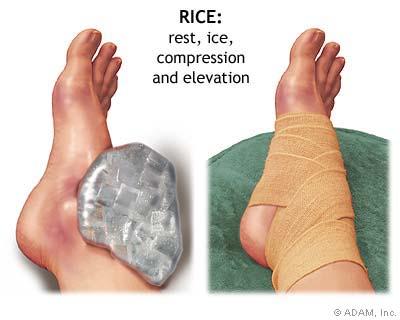
    RICER stands for Rest, Ice, Compression, Elevation, and Refer. RICER highlights 5 simple methods to reduce pain and promote healing.

    Rest – Initially, the objective for healing any soft tissue injury is to minimise swelling and bleeding. Reducing movement, and in some cases immobilising the injured area, is one of the simplest methods to reduce further injury and promote healing 6.

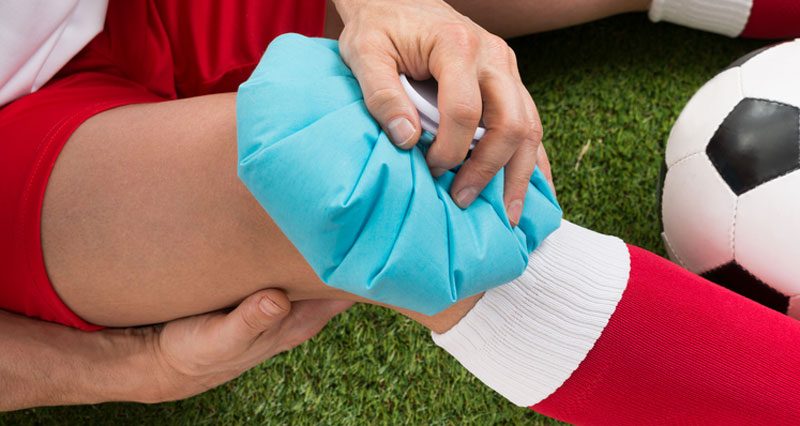
    Ice – Cooling the injured area serves to slow down tissue metabolism 1,2,4. It may cause contraction of blood vessels which will slow down blood flow and assist with reducing swelling 1,2,4. Ice can also provide a temporary numbing effect to assist with short-term pain relief as well as 1,2,4. Ensure that intense cooling is not applied directly to the skin to minimize the potential for skin burns. Applying ice following common injuries such as Rotator cuff tear, Hamstring Strain or Ankle Sprains is usually a good start.

    Compression – Compressing an injured area can have a direct effect on swelling. Applying a bandage to the area can help to limit the amount of bleeding that occurs in an isolated area 3. Caution needs to be taken to ensure that any compressive bandage is firm, however, does not reduce the normal circulation to the area.

    Elevation – Elevating the injured area will also serve to reduce the collection of fluid to the area by limiting the effect of gravity 6. For foot or leg injuries, lying with the injured area elevated above the level of the pelvis with the use of pillows is an easy start.

    Refer – While RICER helps promote healing in the early stages of injury to get the right diagnosis you need to see an appropriate health professional; say a physiotherapist! Here at Physiocure, we can give you an accurate diagnosis and also help plan a return to the sporting field.

     Usually, the treatment of injured muscles should be carried out by immediate immobilization of the injured muscle (clinically, relative immobility/avoidance of muscle contractions). However, the duration of immobilization should be limited to a period sufficient to produce a scar of sufficient strength to bear the forces induced by remobilization without re-rupture and the return to activity (mobilization) should then be started gradually within the limits of pain.

    At Physiocure we aim at, early return to activity, which is needed to optimize the regeneration of healing muscle and recovery of the flexibility and strength of the injured skeletal muscle to pre-injury levels. Our rehab programs are built around progressive agility and trunk stabilization exercises, as these exercises seem to yield a better outcome for injured skeletal muscle than programmes based exclusively on stretching and strengthening of the injured muscle.

    Braces

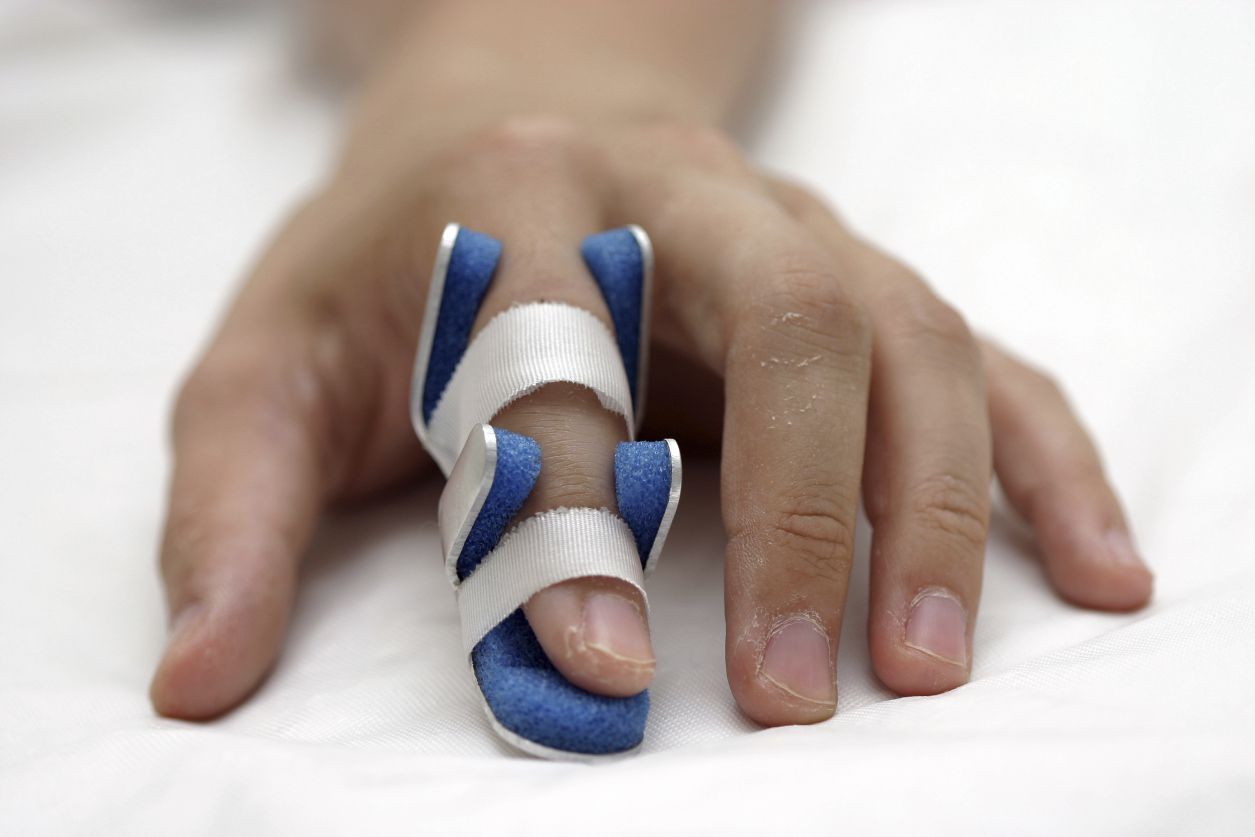
    Braces and splints can be useful for acute injuries, chronic conditions, and the prevention of injury. There is good evidence to support the use of some braces and splints; others are used because of subjective reports from patients, relatively low cost, and few adverse effects, despite limited data on their effectiveness
    They can be used to immobilize an unstable joint or fracture, to unload a portion of a joint and improve pain and function, to eliminate range of motion in one direction, or to modify range of motion in one or more directions. They do not replace a good rehabilitative program, and the entire spectrum of treatment options should be explored and used as needed.

    For acute injury or during a post-operative period, common braces include:
    • walking cast
    • wrist splint
    • ankle brace
    • knee brace
    • finger/toe splints
    • casts (hard and removable)

    An accurate diagnosis of the injury is important in determining whether a brace or splint is indicated. Generally, splints are for short-term use. Excessive, continuous use of a brace or splint can lead to chronic pain and stiffness of a joint or to muscle weakness. However, long-term use of some braces, such as a knee unloader brace, can help prevent the progression of pain attributable to osteoarthritis of the knee.

    Avoid HARM!

    HARM stands for Heat, Alcohol, Running/ exercise,and Massage. HARM represents 4 factors that you should avoid in the early stages of injury in order to maximise healing and recovery. While RICER focuses on minimising bleeding and swelling, HARM covers factors to avoid – all of which will increase circulation to the damaged area.

    Heat – Heat will cause blood vessels to dilate which in turn will increase the flow of blood to the area. Avoid hot baths, showers, saunas, heat packs, and heat rubs.

    Alcohol – Similar to heat, alcohol has an effect of dilating blood vessels, which in turn will increase the flow of blood to the area. Alcohol can also mask pain and the severity of the injury, which may put you at greater risk for re-injury 7.The alcohol effects on sports performance depend on the type and dosage of alcohol, acute vs chronic administration, the alcohol elimination rate as well as the type of exercise. Avoid drinking alcohol in the initial stages of healing any injury.

    Running/exercise – An increase in heart rate increases the flow of blood around the body. This will cause blood to accumulate in the area faster. Take the opportunity to rest.

    Massage – Massaging the area, once again, will stimulate the flow of blood to the area. Avoid massage in the initial stages of injury.

    References:

    1.  The use of ice in the treatment of acute soft-tissue injury.
    2. Cryotherapy for acute ankle sprains: a randomised controlled study of two different icing protocols.
    3. Brukner B, Khan K. Clinical Sports Medicine: Third Edition, McGraw Hill, Australia Pty, Ltd. 2007.
    4. Muscle injuries: optimising recovery. 
    5. The effect of exercise, alcohol or both combined on health and physical performance.
    6. Braces and Splints for Musculoskeletal Conditions