Tag: running injuries

  • Sports Physiotherapy: Why Modern Athletes Are Choosing Evidence-Based Rehab

    If you play a sport — whether it’s Cricket at Juhu Beach or Balkanji bari turf or at MIG Cricket Club in Bandra East, Badminton at Willingdon Gymkhana or in Prabodhankar Thackeray Krida Sankul for Pickle ball, football turf sessions at TurfPark | St Andrews, or Early-morning Marathon training at Carter Road or with STriders or mUmbai runners— chances are your body is dealing with far more load, impact and repetition than you realise.

    And with increasing sports participation in Mumbai, sports injuries are becoming extremely common:
    knee pain while running, shoulder pain while smashing a shuttle, ankle sprains while playing football, lower-back stiffness from gym training.

    This is exactly where sports physiotherapy makes the difference.


    Why Sports Physiotherapy Is Not the Same as General Physiotherapy

    A lot of people still believe physiotherapy is only for pain relief.
    But sports physiotherapy works differently — it focuses on movement, muscle coordination, sport-specific loading, and performance.

    Unlike general physiotherapy, sports physio looks at:

    • What movement pattern caused the injury

    • How your biomechanics affect performance

    • What strength or mobility deficits created overload

    • Whether you are loading too much, too soon

    • How to return you to sport safely

    Most of the times I have noticed atheletes or weekend warriors playing with injuries. they just dont feel like/ dont want o/ dont have time to get it assesed. many a times they visit the medical doctors take basic meds and dont adress it completely and then once the tournament or pain has subsided they dorectly hit the gym and expect gym trainers to do the therapy they should have gone to in the first place.

    A sports physiotherapist bridges that gap by keeping training:

    ✅ Safer
    ✅ Smarter
    ✅ Stronger
    ✅ More sustainable


    Most Common Sports Injuries Seen in Mumbai Athletes (2025 Trends)

    Across clinics in Santacruz, Juhu, Bandra and Andheri, the most common injuries reported by athletes today include:

    1️⃣ Knee pain in runners

    • IT Band syndrome

    • Runner’s knee

    • Patellar tendinopathy

    2️⃣ Shoulder injuries in badminton & tennis players

    • Rotator cuff irritation

    • Shoulder impingement

    • Scapular muscle weakness

    3️⃣ Ankle sprains in footballers & recreational athletes

    • Lateral ligament sprains

    • Balance/proprioception deficits

    4️⃣ Tendon injuries in gym-goers

    • Biceps tendinopathy

    • Achilles overload

    • Elbow tendon pain

    5️⃣ Lower-back tension due to poor mobility

    Especially in cricketers (fast bowlers) and people doing heavy lifts.

    The trend across all areas?
    Most injuries are preventable with early load management, movement correction and sport-specific rehab.


    What a Sports Physiotherapist Actually Does (Beyond Pain Relief)

    A modern sports physio today uses an integrated approach:

    https://www.instagram.com/physiocure_sportsrehabclinic/reel/DGnJ-BAM54P/

    ✔ Movement Screening

    To analyse running form, jumping mechanics, landing technique, racket swing pattern, treadmill gait, etc.

    ✔ Manual Therapy

    Soft-tissue release, joint mobilizations, and myofascial techniques to restore mobility.

    ✔ Strength & Conditioning

    Structured progression for:

    • Strength

    • Mobility

    • Power

    • Agility

    • Endurance

    starting 2025 we conduct only strengthe and conditioning classes at Physiocure. we conduct Mat Pilates on monday, wednesday and fridays and we conduct align and activate posture fitness class on tuesdays and thursdays. you can call us for further details.

    ✔ Sport-Specific Rehab

    Every sport in Santacruz/Bandra/Juhu has unique demands:

    Cricket: rotational core strength, shoulder integrity
    Badminton/Tennis: upper-body control, footwork mechanics
    Running: lower-limb load tolerance, hip stability
    Football: agility, ankle stability, hamstring strength

    ✔ Return-to-Sport Testing

    A critical but often ignored step that prevents re-injury.

    Hop tests, gait analysis, Y-balance tests, sprint tests — depending on the sport.


    Why Athletes from Santacruz, Bandra & Juhu Actively Seek  Affordable Sports Physiotherapy Today

    1. Turf culture

    Football turfs across Santacruz & Bandra have exploded in popularity, increasing high-speed injuries. we can help turf footballers continue playing while we help them recover through sports injuries smoothly

    2. Running communities

    Running clubs like Striders, Bombay running, Nike running club, Mumabi Road Runners, Asics Runners club and self practicing runners around bandra, Khar, santacruz dont know that we run a runner specific injury prevention prorgram. we also do Normatech leg recovery sessions for post marathon or on regular trainig days and help with all kinds of running injuries.

    3. Fitness studio boom

    witht he changing trends some really cool multifunction gyms like FLOFIT BOX  in Bandra and MMA Matrix centre in Khar/ sanatcruz linking road and some really cool gyms around sanatcruz like Fitness First, dessus fitness , Transform gyms and some yoga centres like the body temple yoga, we definetly know people here like to go to the fitness centres and many a time they may need a sports physio for them to address the aches and niggles. we are happy to serve all kinds of fitness freaks so they continue their fitness journery pain free.

    4. Competitive amateur athletes

    Badminton players, tennis enthusiasts and cyclists train hard but recover poorly — leading to breakdown.

    5. Early rehab awareness

    People now realise physio is not last-minute treatment — it’s performance enhancement.


    2025 Insights: What The Latest Research Says

    Sports physiotherapy worldwide is shifting to:

    📌 Load-based tendon rehab (not rest)

    Achilles, patellar & shoulder tendons heal through progressive loading — not through avoiding activity.

    📌 Strong evidence for isometrics + eccentrics

    Particularly in runners and racket-sport players.

    📌 Mobility + control > flexibility alone

    High-performing athletes don’t just stretch — they stabilise.

    📌 Strength symmetry before return-to-sport

    Especially after ACL and ankle injuries.

    📌 Train the movement, not the muscle

    Sport-specific rehab gives faster results than isolated strengthening.


    Sports We Commonly Work With (Based on Real Clinic Cases & Field Trends)

    From everyday athletes to competitive players, sports physio in Santacruz commonly manages:

    🏸 Badminton

    Shoulder overload, knee pain, plantar pain, elbow strain.

    🏃 Running / Marathon Prep

    ITB pain, Achilles tendinopathy, shin splints, calf tightness.

    🏏 Cricket

    Lower-back stress, shoulder issues, hamstring pulls.

    Football

    Ankle sprains, groin strain, hamstring imbalance.

    🏋 Gym / Strength Training

    Lifting injuries, mobility deficits, core weakness.

    🎾 Tennis

    Elbow tendon pain, shoulder dysfunctions, wrist loading issues.


    How to Choose the Right Sports Physiotherapist in Santacruz / Juhu / Bandra

    Before starting rehab, ensure your physio:

    ✔ Understands sport-specific biomechanics
    ✔ Offers structured progression plans
    ✔ Uses objective testing (strength & functional)
    ✔ Treats the root cause, not just the symptoms
    ✔ Blends manual therapy + strengthening + movement retraining

    A good sports physio is not someone who gives only massage or only exercises —
    but someone who can combine science, coaching and clinical expertise.


    Final Thoughts

    Sports physiotherapy is no longer limited to elite athletes — it is essential for anyone active in today’s high-demand fitness culture.

    Whether you’re a:

    • Runner at Juhu Beach

    • Cricketer in Santacruz

    • Badminton player in Bandra

    • Footballer at Carter Road

    • Gym enthusiast training in Khar

    …your body deserves the same level of care that professional athletes receive.

    Your performance, recovery, and longevity in sport depend on how well you move — and how smartly you train.

  • Running

    Running is one of the most popular sports in the world. This not only covers marathons and track and field running – running is also part of the training in virtually all other sports, including soccer, rugby, handball and triathlon. Modified levels and intensities of running can also be used as alternative training for most athletes with certain types of injuries

    Running is a very efficient method for maintaining or improving overall fitness and increasing the structural strength of the leg muscles. Running can be over a distance, in a variety of intervals or as a varied running-jogging-walking program. The intensity and the distance must be proportionate to the runner’s ability and objectives.

    Running on a hard surface

    However,before running on a hard surface, such as roads or astro turf, the runner must be able to withstand the repetitive impact of the ground on to the legs, as each stride will create an impact force of five to ten times body weight for a fraction of a second. Since each stride stresses the same structures, their tensile strength and endurance lie between positive training effects and injury.

    Running on a hard surface mainly loads the lower limbs, where 90 per cent of running injuries are found. The most common error an inexperienced runner makes is to run too fast and too long too early, so that training causes new injuries instead of promoting the healing of another.

    Prescribing hard surface running

    It is important to use common sense when prescribing hard-surface running. For an inexperienced runner the safest way to build up performance after an injury is a slow and steady running tempo,
    including a proper warm-up. The best test of improvement in running capacity is repeatedly to measure the runner’s effort and time in a simple test race.

    Running for general fitness

    For a fairly unfit but otherwise healthy person who wants to improve their general fitness and aerobic performance, running can be recommended as part of a progressive program. From a reasonable starting point, such a program would usually increase less than 15 per cent in distance and intensity per year.

    When to stop/reduce running on a hard surface!!

    • An elite marathon runner with an over-use injury may simply reduce their running time from two hours to one hour per day; not pushing over the pain threshold but gradually increasing the time day by day.
    • A 130 kg rugby player, even though extremely fit, is not a good candidate for long-distance or road running. Their knees will undoubtedly say ‘no!’ to this madness.
    • This type of exercise also cannot be recommended for obese or generally unfit recreational athletes or people with structural knee or hip problems, such as osteoarthritis.


    How do you know your running capacity is decent!!

    A reasonable running tempo that can be maintained for 30 minutes is essential for a persistent training effect. Runners should aim for a pace at which they can chat with a running mate while breathing almost normally; this is equivalent to 60 to 70 per cent of maximum aerobic capacity.

    The subjective experience of running is far more important than the heart frequency, which is not directly proportionate to the runner’s feeling. Even with the same heart frequency, for example 160 beats per minute, running can be very easy one day and very uncomfortable the next.

    Training to run efficiently

    The subjective experience of training is very important for a non-runner’s motivation. Since the surface is consistent for each stride the same structures in the lower limbs will be put under repeated stress. While this leads to a functional adaption of the strength of the structures it can also lead to
    injuries in the short term.

    The comfortable fitting shoe for running

    This also highlights the importance of proper, comfortably fitting of The Running Shoe with a cushioned sole, which can reduce the impact from touchdown in the stride, distribute the forces and provide stability to the ankle and foot.


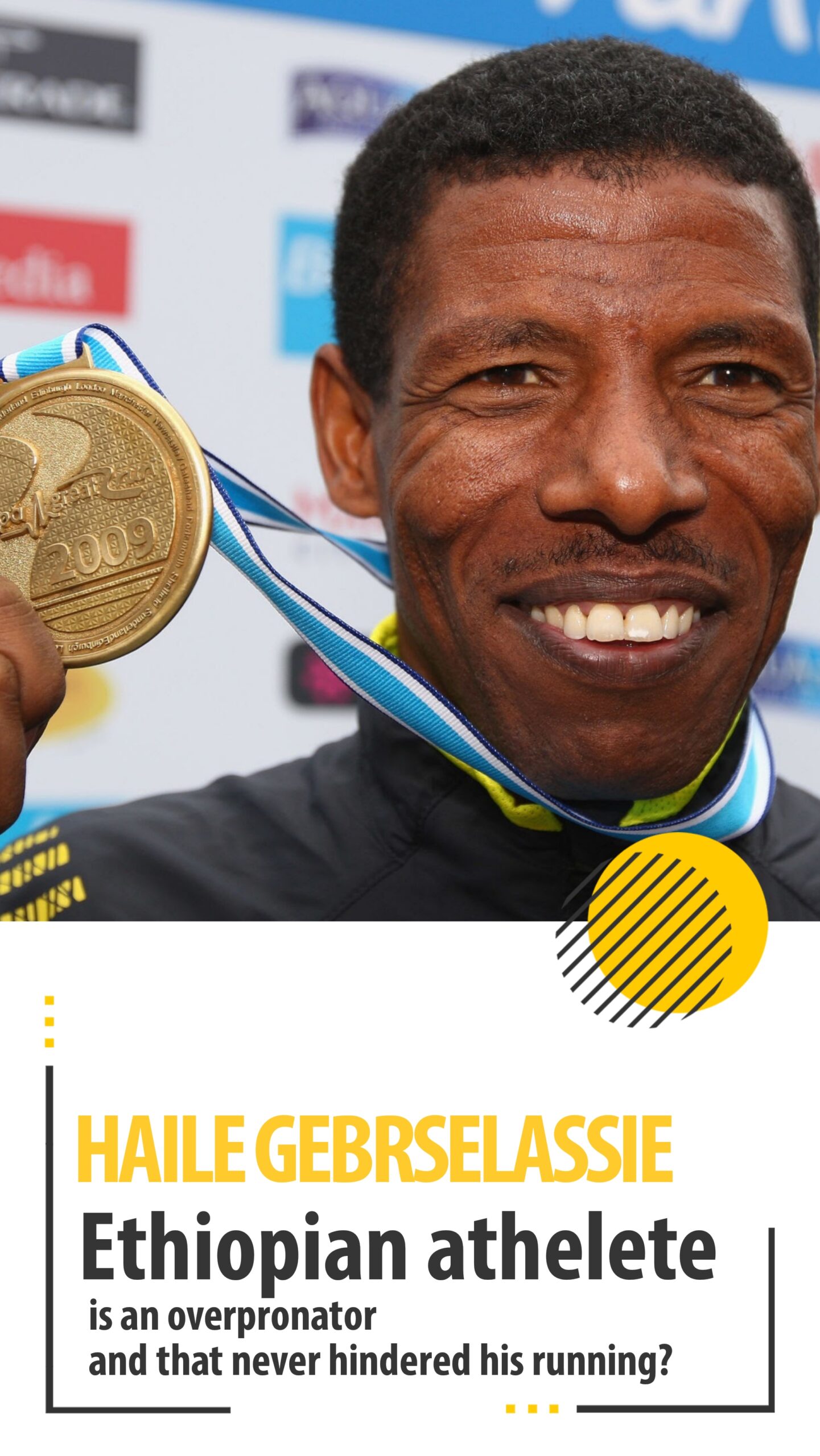
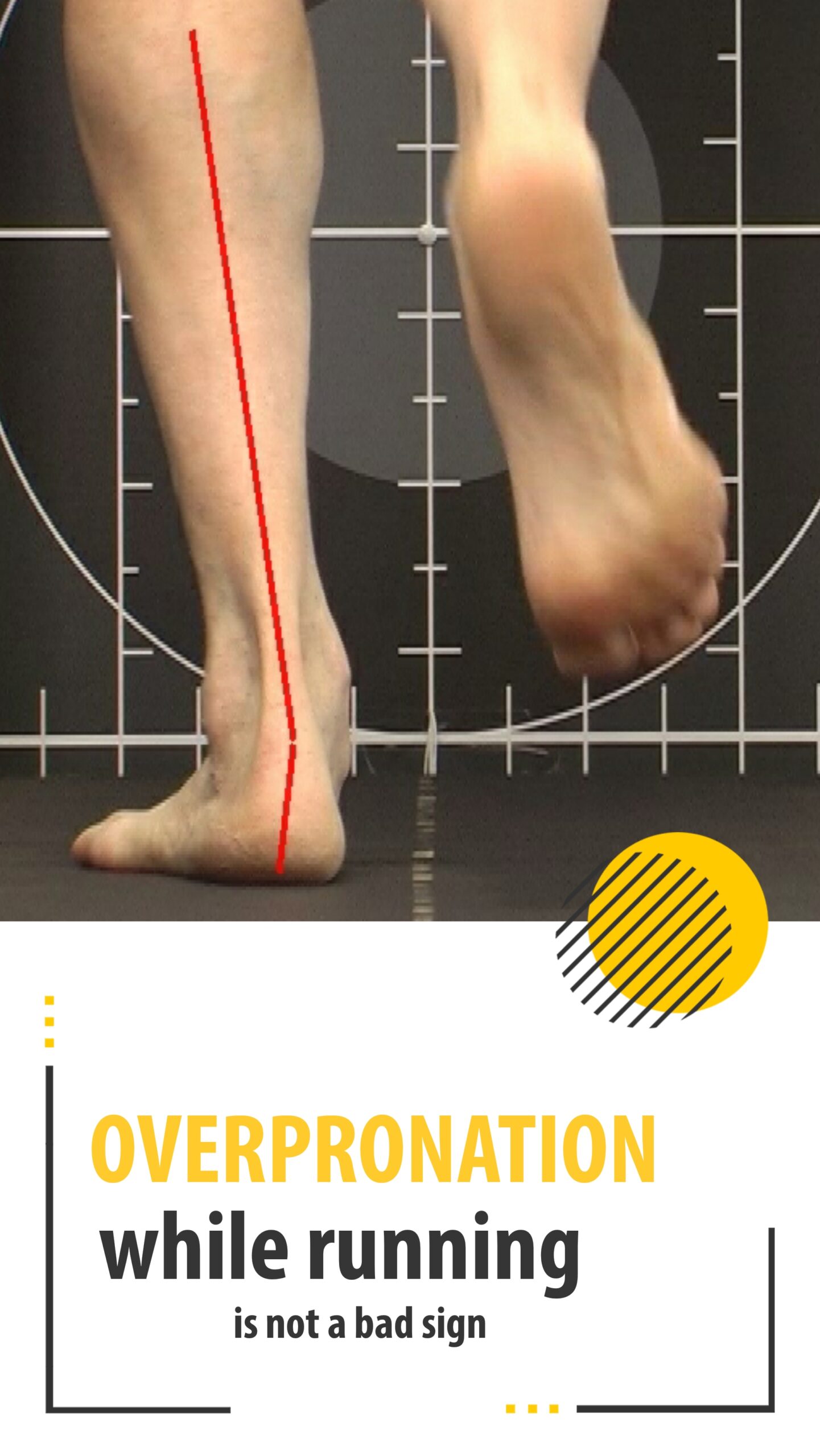
    overpronation is normalmarketing strategyEthopian athlete


    Regular runners will soon find their own style, but might have more trouble getting a consistent style of footwear. Most running injuries are caused by training errors.

    We usually recomment these ankle mobility exercises for runners training for a marathon

    Don’t get carried away!!

    The commercial running shoe market is unfortunately mainly fashion-orientated and new models are pumped out every six months. Despite improved bio mechanical knowledge, which manufacturers claim has revolutionized the market, and lighter high-quality materials and technology within the sole to compensate for different individual factors, modern running shoes do not last long. It may also be questioned whether they have reduced the incidence of injuries.

    Soft Surface Running

    Running on soft surfaces maintains or increases fitness and tensile strength of the lower limbs and with less eccentric impact compared to running on hard surfaces. A well-balanced running programme over beachess, in parklands or in forests can be recommended as a primary alternative
    training for most runners and other athletes with over-use injuries, even those of the lower limbs.

    People with mild or moderate knee or hip osteo-arthritis, who struggle to run 500 m on the road, may be able to jog a 5 km orienteering course without adverse effects.

    people with knee or hip arthritis must do these stretches before going for the run

    Advantages of soft surface running

    • A varied and soft running surface creates a lower impact on the musculo-skeletal system, due to the longer time for shock absorption from each stride and the wider distribution of forces over the kinetic chain.
    • On the other hand, the runner is forced to work harder, from a muscular point of view; they need to lift the knees higher when running uphill or over obstacles on the ground like vegetation.
    • This consumes more energy and, all in all, uses more muscle groups than running on hard surfaces.
    • Running in forests consumes up to twice as much energy per kilometer as road running.
    • Running on soft surfaces is less demanding for the lower limbs but, due to the increased energy demand, puts more stress on the cardiovascular and respiratory system and so is good for weight reduction and general fitness.

    Risks of soft surface running!!

    • There are risks in the prescription of this type of training. Over uneven terrain, the risk of ankle sprains and falls increases.
    • Even though temporarily running on soft surfaces can be recommended for a marathon runner with over-use injuries of the lower limbs, they must be aware of the increased risks.
    • Proprioceptive ankle training and core stability training must accompany alterations in running type.


    Who should avoid running on soft surfaces

    Older athletes, or fragile patients with osteoporosis or disabling injuries, may jog or walk on softer surfaces instead of running

    Last but not the least if you are into running you must follow these three stretches everyday to prevent yourself from injuries.

  • The Running Shoe ?

    As more and more people resort to running for health and fitness, so have the number of  Running injuries increased. A visit to Physiocure we can help you educate with the foot types, shoe designs and a simple examination can reveal which foot type you run with and is your current running shoe good enough.

    When we happened to interact with our professional runners on how they choose their shoes, we were not surprised at all. Most consumers are nowadays visiting the sports shoe showrooms and are made to walk on the treadmill, a foot scanning is done and then the shoe is prescribed at least in metro cities in India, for smaller cities it’s more of what feels comfortable and what fits my budget.

    A lot of people pick up running shoes based on

    • available discounts,
    • latest styles or
    • they are consulted by so called “storeroom shoe prescription experts” into buying the motion controlled or pronation control type footwear.

    this is common and is not always bad, but really it is a matter of concern. after 12 years of practice, I believe, a low arch, motion-controlled shoe, a high arch are secondary factors that contribute to running injuries, and its just a “fear-based marketing approach” to sell new, highly-priced running shoes

    overpronation is normalmarketing strategyEthopian athlete


    Before you go for the new shoe selection trip to these stores again, ask yourself these questions:

    • Would you take the advice of a person trained by a marketing expert into explaining the foot scanning in these stores or your physio/health care provider?
    • Did you check your foot type from a podiatrist/physio/health care provider or the sales guy at these stores?
    • Has choosing shoes on based of feel, prevented your number of sports injuries.
    • Is you running pattern in sync with the motion control shoes you’ve been offered.
    • Is the sales guy really a shoe prescription expert?
    • Was there something wrong with my last shoe or my running style or fitness?


    What does research say??

    Where can we find the truth, as physiotherapists? Peer-reviewed research is a fantastic source of information and can guide us to the truth when it comes to what Running shoe is best for our patients.

    It was once believed that those with low arches should wear “motion-control” shoes which are designed to be more rigid. Those with a more neutral or “normal” arch should be placed in “stability” shoes, and those with a high arch should be placed in more cushioned, “neutral” shoes.

    Despite common “knowledge” in the running community, selecting a shoe based on arch-height does not lead to reduced injury (1).

    Another misnomer commonly used for shoe prescription indicates that excessive pronation of the foot and ankle leads to injury, so shoes should be fitted to reduce pronation.

    Current research is inconsistent and conflicting but has not shown a strong correlation between “excessive” pronation and injury (2, 3).

    Pronation or foot posture can not confidently be used as an indicator for shoe prescription, barring further research.

    What about “minimalist” shoes?

    Once again, not enough research has been completed to confidently say that wearing minimalist shoes leads to reduced injuries. Minimalist shoes are designed to mimic running barefoot, resulting in a foot-strike closer to forefoot (4). This “strike-pattern” is linked to reduced forces placed through the shin bone ( a.k.a thetibia) and the knee.


    Also, running barefoot actually has been shown to reduce ground-reaction forces through the leg, when compared to running with neutral shoes (5).

    As discussed, much of the “common knowledge” about Running shoe selection is either false or has little evidence to support it. So, what is the best way to recommend shoes?

    (more…)