Tag: runners knee

  • Patellar Tendinopathy

    Patellar tendinopathy is a common painful, overuse disorder, often presenting with knee pain in the front portion below the knee cap area.Also commonly known as Runner’s knee or Jumper’s knee. A thorough history and physical examination are necessary, but imaging can also aid in the diagnosis. The majority of cases resolve with physiotherapy. Once patients pass the initial inflammatory phase and remain symptomatic, treatment becomes more difficult.

    Let us first try to understand where the patellar tendon is.

    On the front of the thigh a group of muscles called quadriceps are placed. These muscles form a tendon just above the knee cap (patella) which passes on and around the patella and extends to end at the shin bone (tibia). The portion below the patella is called the patella tendon

    What is the function of this tendon?

    • It connects the quadriceps muscle to the shin bone. Or it connects the thigh to the shin over the knee joint.
    • Because of its structure it can transmit the force generated by this muscle as well as absorb ground reaction forces without minimal energy loss.
    • It is flexible in nature.
    • It provides proprioception- this means it provides constant signalling of the knee position to the brain and helps the brain respond appropriately.


    What is the tendon made of?

    • It’s made of collagen which can bear the load put on the tendon & elastin component which provides some flexibility to the tendon.
    • This combination is arranged in several layers which then forms a guy rope kind of structure made of thin fibril like ropes assembled together.
    • This guy rope is further covered by thin sheet of connective tissue called paratenon which provides nutrition to the tendon.

    the more chronic or older your tendon problem will be the deeper it will reach to the tendon and may take a longer time to get the structural integrity back. but the best part is it is possible to restore the structural integrity with just physio


    How does the tendinopathy develop?

    • Tendinopathy means some pathology in the tendon.
    • When the tendon is suddenly loaded beyond its capacity to handle, there is some damage to the minute structure within the tendon. If these structures are not able to recover appropriately, overall the tendon is not fit to even take the normal load leading to tendinopathy. This would be the sudden overload theory.
    • Secondly if the tendon is repetitively loaded without sufficient time for recovery, slowly over a period of time the minute structures within the tendon are not able to take the load leading to the tendinopathy.
    • Thirdly the quadriceps muscle force generation has an effect on the tendon. Is it is tight the force generated cannot be dissipated properly or if there is continuous eccentric load which the muscle can’t handle, then the tendon takes the beating.


    The location where the tendon tends to develop a pathology?

    Usually the tendon injury in detail is identified by its location that is, whether tendon is injured at its attachment on the knee cap, in the middle part of the tendon or at the lower portion attached on the shin bone is injured. The evidence based on a research below states the following

    “This study confirms that patellar tendinopathy is not restricted to the proximal pole. Although the proximal pole was the most commonly involved location, distal pole involvement was common occurring in 38% of scans. The vast majority of previous studies have concentrated on proximal disease to the neglect of distal disease. Involvement of the mid patellar tendon was less common and when it did occur it almost always occurred in conjunction with pathology of either the proximal and/or distal poles. Isolated involvement of the middle portion of the patellar tendon was very rare (occurring in only one scan). As a result of this study the following recommendations are made:

    This means that the tendon can get affected at the bone attachment near the patella or the shin bone, however getting injured in the middle part of the tendon is rare. Also the rehab program is different depending on the location of the injured tendon.

    How does the tendon respond to loading?

    When we talk about tendon loading, what we are discussing is repetitive jumping activities or exercises where the quadriceps muscle needs to be stretched and handle the body weight at the same time which directly loads the tendon. To understand how the pathology develops it is necessary what factors affect the loading of the tendon.

    • If the tendon is thicker or longer it can with stand more load
    • With age the load bearing capacity reduces and it takes longer time to recover.
    • The tendon cannot withstand a situation where the tendon is getting compressed and loaded.
    • It cannot withstanding loading continuously especially when it is fatigued
    • If the leg has been immobilized for a long time, the tendons load bearing capacity reduces.
    • The tendons microcirculation if impaired, it will affect the nutrition to the tendon and indirectly delay the healing, in that case again the tendon may not be able respond normally to normal loads.
    • Local injection of corticosteroid into the injured tendon cause further thinning of the tendon and decreased strength, affecting the ability to bear load.
    • Diabetes affects the healing of the tendon and reduces the ability to take load.
    • Reduced oestrogen hormone can cause loading issues and lead to tendinopathy.

    Having said that , the rehab for any tendinopathy is based on loading exercises which are used in a biomechanically correct position to help reduce pain and build the tendon strength back. so don’t get confused. remember injury is caused due to faulty loading and overuse and injury will be resolved with correct loading and appropriate rest.


    What are the Risk factors for developing patellar tendinopathy?

    For nine risk factors there was some evidence:

    1. weight,
    2. body mass index,
    3. waist-to-hip ratio,
    4. leg-length difference,
    5. arch height of the foot,
    6. quadriceps flexibility,
    7. hamstring flexibility,
    8. quadriceps strength and
    9. vertical jump performance.

    Based on the present evidence, reducing body weight, increasing upper-leg flexibility and quadriceps strength and the use of orthotics may be beneficial treatment options. However, it should be stressed that the evidence for the nine identified risk factors was only limited.

    (more…)

  • Running

    Running is one of the most popular sports in the world. This not only covers marathons and track and field running – running is also part of the training in virtually all other sports, including soccer, rugby, handball and triathlon. Modified levels and intensities of running can also be used as alternative training for most athletes with certain types of injuries

    Running is a very efficient method for maintaining or improving overall fitness and increasing the structural strength of the leg muscles. Running can be over a distance, in a variety of intervals or as a varied running-jogging-walking program. The intensity and the distance must be proportionate to the runner’s ability and objectives.

    Running on a hard surface

    However,before running on a hard surface, such as roads or astro turf, the runner must be able to withstand the repetitive impact of the ground on to the legs, as each stride will create an impact force of five to ten times body weight for a fraction of a second. Since each stride stresses the same structures, their tensile strength and endurance lie between positive training effects and injury.

    Running on a hard surface mainly loads the lower limbs, where 90 per cent of running injuries are found. The most common error an inexperienced runner makes is to run too fast and too long too early, so that training causes new injuries instead of promoting the healing of another.

    Prescribing hard surface running

    It is important to use common sense when prescribing hard-surface running. For an inexperienced runner the safest way to build up performance after an injury is a slow and steady running tempo,
    including a proper warm-up. The best test of improvement in running capacity is repeatedly to measure the runner’s effort and time in a simple test race.

    Running for general fitness

    For a fairly unfit but otherwise healthy person who wants to improve their general fitness and aerobic performance, running can be recommended as part of a progressive program. From a reasonable starting point, such a program would usually increase less than 15 per cent in distance and intensity per year.

    When to stop/reduce running on a hard surface!!

    • An elite marathon runner with an over-use injury may simply reduce their running time from two hours to one hour per day; not pushing over the pain threshold but gradually increasing the time day by day.
    • A 130 kg rugby player, even though extremely fit, is not a good candidate for long-distance or road running. Their knees will undoubtedly say ‘no!’ to this madness.
    • This type of exercise also cannot be recommended for obese or generally unfit recreational athletes or people with structural knee or hip problems, such as osteoarthritis.


    How do you know your running capacity is decent!!

    A reasonable running tempo that can be maintained for 30 minutes is essential for a persistent training effect. Runners should aim for a pace at which they can chat with a running mate while breathing almost normally; this is equivalent to 60 to 70 per cent of maximum aerobic capacity.

    The subjective experience of running is far more important than the heart frequency, which is not directly proportionate to the runner’s feeling. Even with the same heart frequency, for example 160 beats per minute, running can be very easy one day and very uncomfortable the next.

    Training to run efficiently

    The subjective experience of training is very important for a non-runner’s motivation. Since the surface is consistent for each stride the same structures in the lower limbs will be put under repeated stress. While this leads to a functional adaption of the strength of the structures it can also lead to
    injuries in the short term.

    The comfortable fitting shoe for running

    This also highlights the importance of proper, comfortably fitting of The Running Shoe with a cushioned sole, which can reduce the impact from touchdown in the stride, distribute the forces and provide stability to the ankle and foot.


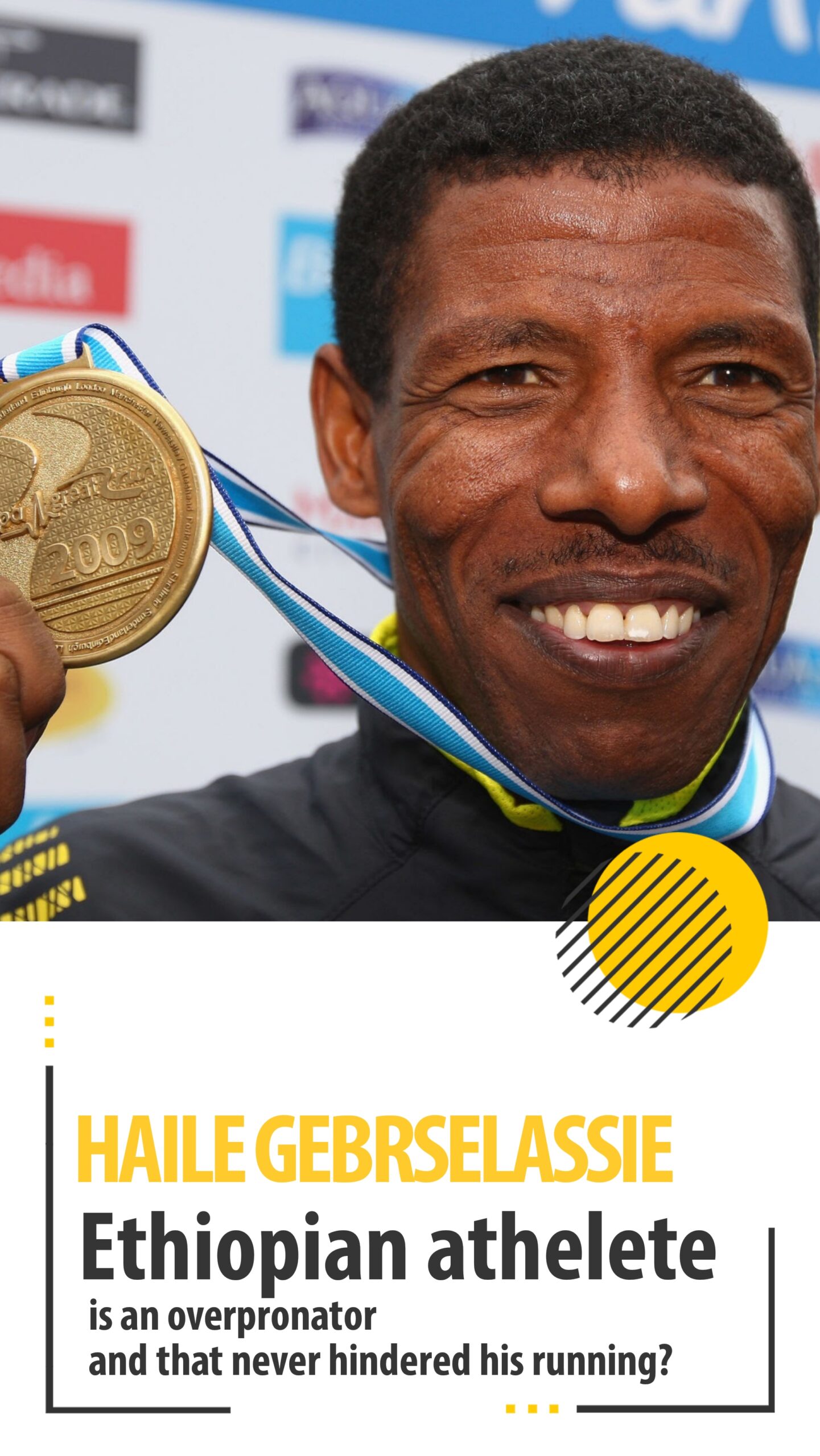
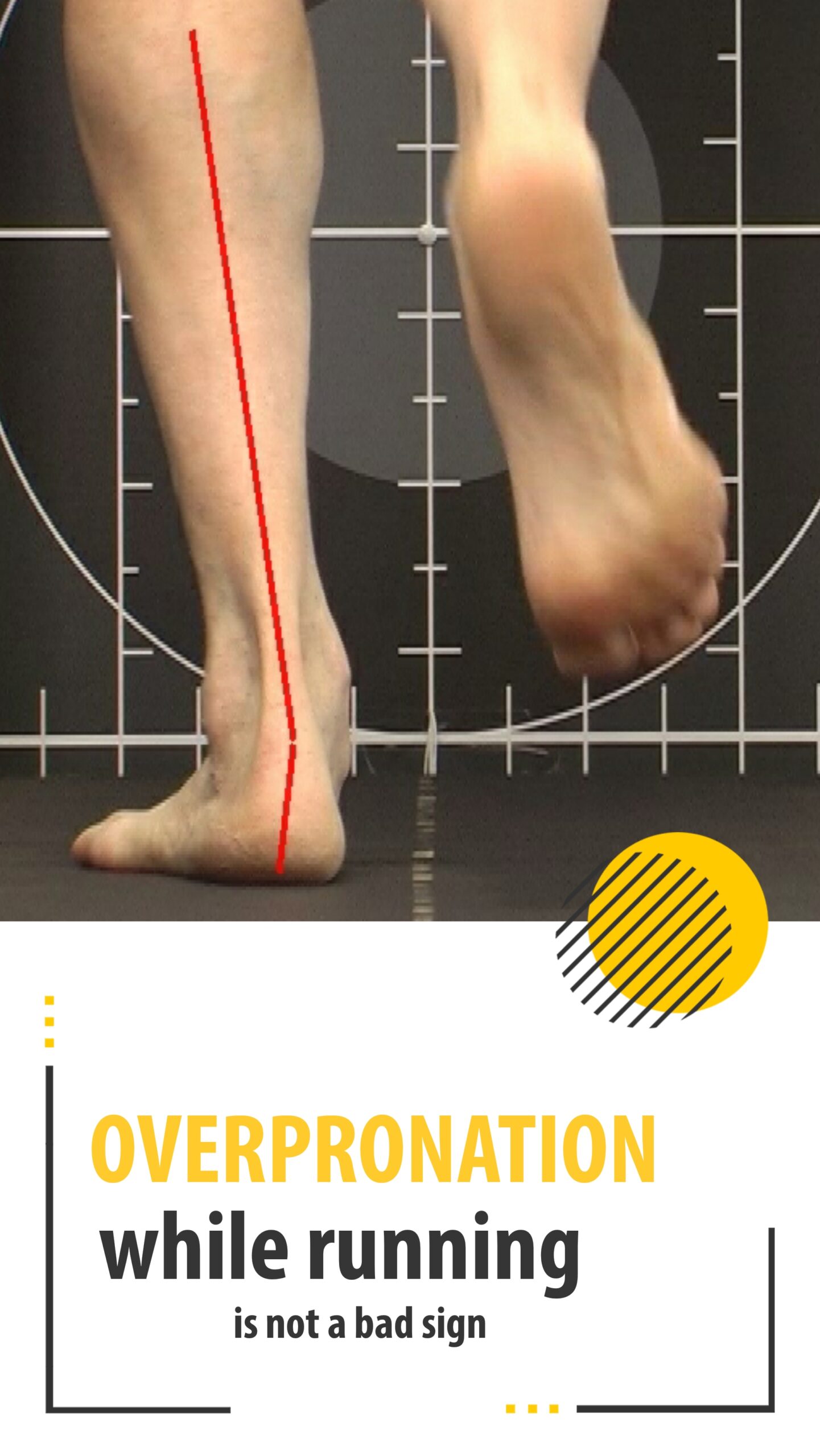
    overpronation is normalmarketing strategyEthopian athlete


    Regular runners will soon find their own style, but might have more trouble getting a consistent style of footwear. Most running injuries are caused by training errors.

    We usually recomment these ankle mobility exercises for runners training for a marathon

    Don’t get carried away!!

    The commercial running shoe market is unfortunately mainly fashion-orientated and new models are pumped out every six months. Despite improved bio mechanical knowledge, which manufacturers claim has revolutionized the market, and lighter high-quality materials and technology within the sole to compensate for different individual factors, modern running shoes do not last long. It may also be questioned whether they have reduced the incidence of injuries.

    Soft Surface Running

    Running on soft surfaces maintains or increases fitness and tensile strength of the lower limbs and with less eccentric impact compared to running on hard surfaces. A well-balanced running programme over beachess, in parklands or in forests can be recommended as a primary alternative
    training for most runners and other athletes with over-use injuries, even those of the lower limbs.

    People with mild or moderate knee or hip osteo-arthritis, who struggle to run 500 m on the road, may be able to jog a 5 km orienteering course without adverse effects.

    people with knee or hip arthritis must do these stretches before going for the run

    Advantages of soft surface running

    • A varied and soft running surface creates a lower impact on the musculo-skeletal system, due to the longer time for shock absorption from each stride and the wider distribution of forces over the kinetic chain.
    • On the other hand, the runner is forced to work harder, from a muscular point of view; they need to lift the knees higher when running uphill or over obstacles on the ground like vegetation.
    • This consumes more energy and, all in all, uses more muscle groups than running on hard surfaces.
    • Running in forests consumes up to twice as much energy per kilometer as road running.
    • Running on soft surfaces is less demanding for the lower limbs but, due to the increased energy demand, puts more stress on the cardiovascular and respiratory system and so is good for weight reduction and general fitness.

    Risks of soft surface running!!

    • There are risks in the prescription of this type of training. Over uneven terrain, the risk of ankle sprains and falls increases.
    • Even though temporarily running on soft surfaces can be recommended for a marathon runner with over-use injuries of the lower limbs, they must be aware of the increased risks.
    • Proprioceptive ankle training and core stability training must accompany alterations in running type.


    Who should avoid running on soft surfaces

    Older athletes, or fragile patients with osteoporosis or disabling injuries, may jog or walk on softer surfaces instead of running

    Last but not the least if you are into running you must follow these three stretches everyday to prevent yourself from injuries.

  • Knee Cap Cartilage Tear

    Chondromalacia patellae is a condition affecting the knee cap (also known as the patella bone) at the knee joint which results because the cartilage of the knee cap softens and undergoes wear and tear.

    Pain & crepitus are most often experienced in and around the knee cap. You may experience difficulty in walking, running, climbing or descending stairs due to pain. This condition is seen more commonly in women than in men.

    How does chondromalacia patellae occur?

    1. The positional fault of the knee cap
    2. Steroid injection at the knee leading to weakening of the articular cartilage
    3. Osteoarthritis at the knee joint
    4. Trauma
    5. Post-surgical knee immobilization
    6. Obesity
    7. Overuse injuries, usually seen in athletes

    symptoms:-

    Anterior knee pain is the most common chief complaint of patients with chondromalacia. This pain is usually made worse with activities that increase the stress on the patellofemoral joint, for example, stair climbing, squatting, and running.

    What activities must I avoid and for how long?

    The best treatment is to avoid activities that compress the knee cap on the joint. This means avoiding going up and down the stairs and hills, deep knee bends(squats), kneeling, step aerobics, and high impact exercises(jumping, sprinting, etc). Do not wear high-heeled shoes. Do not exercise sitting on the edge of the table lifting leg weights (knee extension).

    Sports that aggravate chondromalacia patella are:

    1. Volleyball
    2. Basketball
    3. Soccer
    4. Distance running
    5. Raquet-ball
    6. Squash
    7. Weight lifting
    8. Occasionally cycling

    How can you prevent it?

    In regular individuals or athletes, an exercise program to maintain on the overall leg strength and mobility should help in preventing this problem. In athletes, sports specific activities leading to increased wear and tear of knee cap should be examined and corrected by the appropriate coaches/trainers.

    How Physio helps?

    A Physiotherapy treatment program is based on correcting the mechanics of the knee and help in reducing pain and disability.

    Are pain medications not enough?

    Pain medications will certainly help in reducing pain but will not help correct the faulty mechanics at your knee. This may lead to frequent recurrence of the problem. Therefore, physiotherapy becomes an important part of the treatment.

    What does the treatment process involve?

    The treatment process includes correction of certain lifestyle factors affecting pain (weight, daily activities, footwear and many more). A combination of electrotherapy, Kinesiotaping and soft tissue mobilisation/dry needling is done along with neuromuscular retraining exercises.

    What kind of knee support can you use?

    Elastic knee cap with a small opening in the front for the knee cap

    What immediate treatment can I do to reduce pain/ swelling?

    Icing over the front of the knee joint for 10-15 mins helps.

    References:-

    1. Chondromalacia Patella