Tag: post natal exercises

  • Post Natal Back Pain – A Personal Take

    Its been a while since I wanted to share my personal experience of dealing with post pregnancy back pain and finally I decided to share my experience .Post Natal Back pain has been a trouble to 90% of the moms and its been their reason of being afraid to exercises too soon or take up fitness like before their pre preganacy days.


    postnatal fitness


    Its a beautiful feeling to have your baby finally in your arms but , its a difficult time immediately post pregnancy. there is no day and night schedule for the first 40 days ( like they say in traditional Indian words to which I totally agree), you need to recover out of the birthing experience yourself, you need to get to know your baby more (no doubt your partner and family support is always there) but still its a different experience.
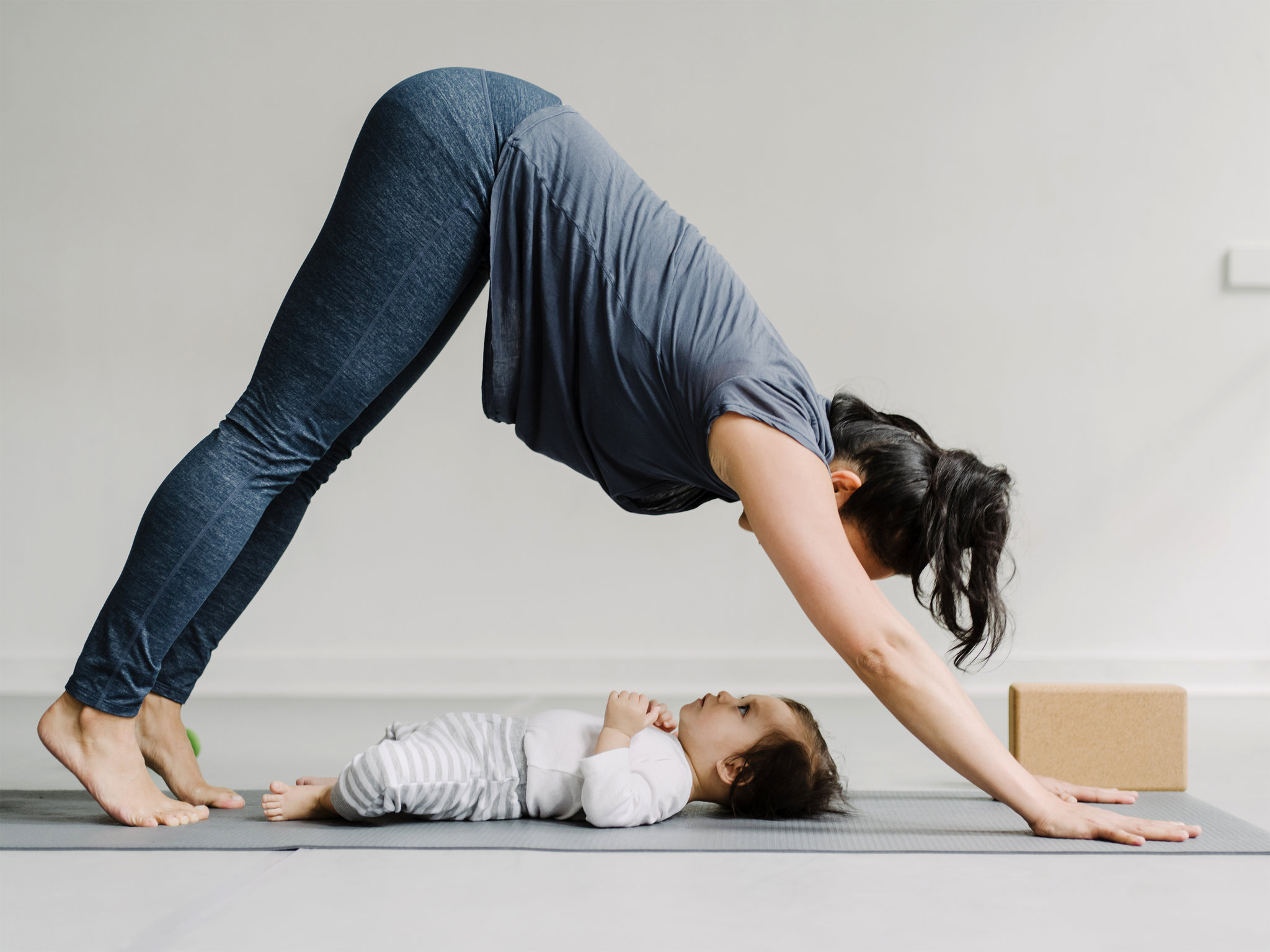
    For me, it was a C-section or a planned delivery and I started experiencing back pain second day post delivery. it was really difficult to turn sides, get up from the lying down position. if I got up from the chair, I would be bent for a while and then gradually straighten up. once I lied down after feeding my baby in sitting position, even lying down flat would be uncomfortable. somewhere it struck me that the earlier the measures are taken to solve the back pain, the better will be the recovery.

    I started my back care after getting discharged from the hospital, at home basically. I started hot compress initially, atleast 3-4 times a day. there where medications to deal with the pain for the first 10 days as well. I did not follow any exercises for the first 2 days in the hospital.

    As soon as my baby delivered on the 3 rd day , I started with this simple exercise to activate lower back muscles along with pelvic floor muscle training along with hot compress and started to feed my baby in sitting position most of the times.

    Its very important to take a good back support while feeding the baby and avoid slouching as it aggravates the lower back pain.

    At this point every time, I sat for nursing , I would ensure there is sufficient back support and i’m not sitting uncomfortably in a wrong posture to feed. it the most important thing to follow till u continue feeding your baby.

    At 2 weeks, I started with these lower back = beginner level rehab exercises. These worked fantastically to activate my lower back muscles. I would do the following exercises everyday in the morning post a traditional Indian massage along with PFM’S each for 10 repetitions daily for the next 2 weeks.

    At 4 weeks, I started with Mckenzie back extensions, supine bridges, level 0 and Level 1 core muscle exercise along with 20 min leisure walks daily to add on the previous program. I continued taking hot compress at least twice in a day.

    As a traditional Indian measure, I had also started massage with a local masseur, which helped relax the back every day. I also had a few diet changes to support my recovery which were majorly traditional Indian measures.

    Normally most informative websites will advice to start exercising only after 8 weeks of pregnancy. but the latest research says otherwise, the earlier you start doing easy and low key exercises the faster you will recover from back pain due to pregnancy

    At 8 weeks, I was doing half an hour walks daily along withe these core strengthening for lower back  exercises.

    Currently I occasionally experience back pain, to be frank, sometimes it is not possible to keep the schedule as i’m still learning the art of multitasking with baby, work and house responsibilities, all in one hand.

    I think what really helped me is all the activity during my pre natal time. being active, to not stop working or not to be adviced bed rest, to do squats during pregnancy were few things helped me get back to fitness faster.

    currently i’m following this core stability program which is based on Pilates school of thought to keep my lower back strong. Check it out !!

    If you have faced a similar problem do contact me at physiocure17@gmail.com, I maybe able help you out.

    PS:- share this article and follow the blog post for further updates on regaining my fitness post pregnancy.


  • Pregnancy And Exercises

    Currently a very small % of women exercise at the recommended levels in India. In fact most obstetricians recommended avoiding exercise.

    There are lot of myths in terms of exercising during pregnancy, namely

    1. Physical activity has detrimental effects such as increasing body temperature.
    2. There is an increased risk of congenital abnormalities.
    3. Shifting oxygenated blood & energy away from the developing foetus, thus leading to disturbance in growth of the baby.

    All these and many more and no scientific research or proof to prove them true.

    Usually a normal pregnancy lasts for 36-40 weeks in which the woman gains around 10-15 kgs. The common physical problems associated with pregnancy are cramps, varicose veins, symphysis pubis dysfunction, carpal tunnel syndrome, rib pain, stress incontinence, tiredness & Low Back Pain

    Anatomical and biomechanical changes during pregnancy

    It is important to understand certain anatomical regions of the bones and muscles supporting the pregnant uterus as well their effects on our daily activities.

    The Pelvis

    The pelvic girdle is an important anatomical structure with respect to pregnancy. Relaxation of the pelvis is essential during pregnancy in order to make room for the growing fetus . The anatomy of the pelvic girdle as follows:

    • The pelvic ring includes the sacrum, the sacroiliac joints, the ilium, pubis and ischium and the pubic symphysis
    • Unlike the male pelvis which is narrow, deep and oblong the female pelvis is wide, shallow, roomy and round. The main differences are that the subpubic angle is wider and the inlet plane is bigger in the female pelvis.
    • In the pelvis the sacroiliac joints are the connection of the spine and legs
    • The sacro iliac joints (SIJ) are primarily stabilized by the anterior sacroiliac ligament, interosseous ligament and short and long posterior sacroiliac ligaments
    • Muscles that stabilize the SIJ joint are erector spinea, lumbar multifidi, abdominal muscle group (external and internal obliques, rectus abdominis and transverus abdominis) and hamstrings


    When the female pelvis does not conform to the normal alignment problems can occur. A non-optimal relation between the maternal pelvis and the fetal head may lead to complications during childbirth, potentially necessitating a caesarean section (Wilder 1988). Maternal causes include earlier pelvic trauma and innate malformations. Fetal causes include hydrocephalus disturbed circulation of cerebrospinal fluid which leads to brain dilation and cranial expansion.

    Pelvic floor muscles

    • The pelvic floor muscles are important during the pregnancy and the delivery.
    • The pelvic diaphragm consists of the levator ani and coccygeus muscles which support the pelvic viscera.
    • The coccygeus muscle in addition, flexes the coccyx. The pelvic wall consists of the piriformis and obturator internus muscles which also have a function at the hip joint.
    • The pelvic floor consists of the sphincter and erector muscles.

    Abdominal wall muscles

    • The anterior abdominal wall consists of the rectus abdominis muscle which acts to flex the trunk.
    • There are internal and external oblique muscles which act together to bend the trunk to the same side and rotate to the opposite side.
    • The obliques have a bilateral function to flex the trunk, compress abdomen and stabilize the pelvis.
    • These muscles are directed vertically, horizontally and oblique.
    • During pregnancy the diameter of the abdomen increases due to which some women develop a lateral separation of the rectus abdominus, which may persist even after the pregnancy.
    • The function of these muscles seems to be the same as with non-pregnant woman.
    • The ability of the abdominal muscles to stabilize the pelvis against resistance has been shown to be less in the third trimester of the pregnancy and this stays with the majority of the women until at least 8 weeks after birth.

    Biomechanics

    • During pregnancy the total body mass increases as the fetus develops, which increase the body weight and changes the physical loading.
    • As the gravid uterus increases in size, the centre of gravity shifts forward, causes the pelvis to move in the front and may result in an increased curvature in the lower back and anterior flexion in the neck .
    • Vertical forces applied to the feet during dynamic activities, such as walking, running and jumping, reach larger magnitudes ranging from two to five times body weight. However the majority of the mass is retained in the trunk region.
    • Getting up from a chair while pregnant causes a 33% increase in the tibiofemoral joint force, an 83% increase in patella femoral force, 100% increase in the activity of the quadriceps muscles and 35% increase in activity in the hamstring muscles.

    http://physiocure.in/updates/pregnancy-and-exercises/safety-issues-in-pregnancy/

    Effects of Exercises in Pregnancy


    [contact-form][contact-field label=”Name” type=”name” required=”1″][contact-field label=”Email” type=”email” required=”1″][contact-field label=”Message” type=”textarea”][/contact-form]