The hamstrings are involved in a host of athletic motions that include running, jumping, and kicking. Hamstring function is important to the performance of most sport-related activities, particularly when fast running is required. Furthermore, dancers exhibit a high incidence of muscle injuries. The relevance of hamstring injuries in sports is therefore paramount.
At a higher professional level, most teams, coaches, and the physios on board are aware of the risk factors that may cause hamstring strain and do add a prevention program or prehab just to prevent anything during the peak playing season.
Before we get into details of ,what hamstring exercises should one do, lets try to further understand the injury and the basic anatomy of “the hamstrings muscles”.
What is Hamstrings?
The hamstrings are the back of the thigh muscles. Understanding their anatomy can help you understand why hamstrings pain. Or why does hamstrings injury occur? Or is the hamstring injury serious or not?
ANATOMY:-
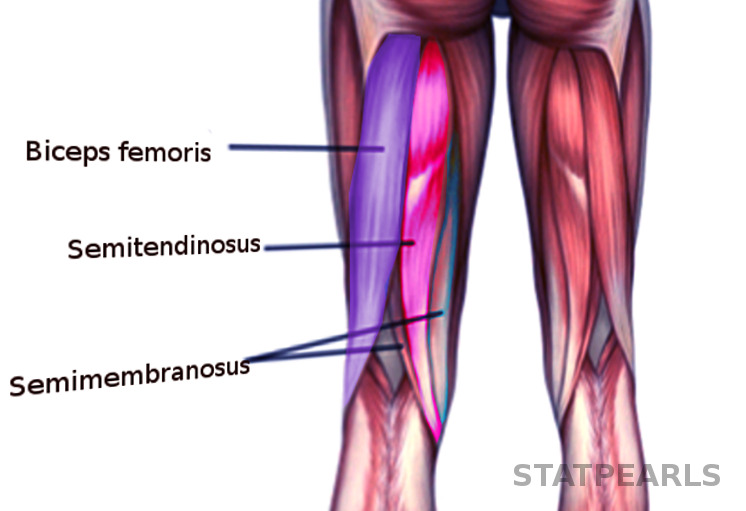
 The hamstrings are a group of four muscles located on the back of the thigh. Semitendinosus (ST), Semimembranosus (SM), and biceps femoris long head (BFlh) all have their origins at the Hip (that is the pelvis), whereas biceps femoris short head (BFsh) originates along the thigh bone from a particular point.
- This group of 4 muscles ends at the knee.
- Of the 4 muscles biceps femoris is a 2 joint muscle that is it acts in the hip as well as the knee.
- These muscles help in flexion and extension at the knee, they also help in extension at the hip.
- Other than that they help in controlling the amount of flexion happening at the hip by forming a couple with the hip joint flexors and they are also active when the leg is kicked outward from the hip, that is abduction.
Along with this information, there are some important biomechanical functions of the hamstring muscles, which must be understood.
BIOMECHANICAL CONSIDERATION:-
- The Hamstring muscle group functions over 2 joints and is therefore the hamstrings stretch at more than 1 point.
- When challenged to perform high-velocity fast actions, the hamstrings are the group of muscles that can generate power through fast twitch fibers and hence that also makes it predisposed to injury.
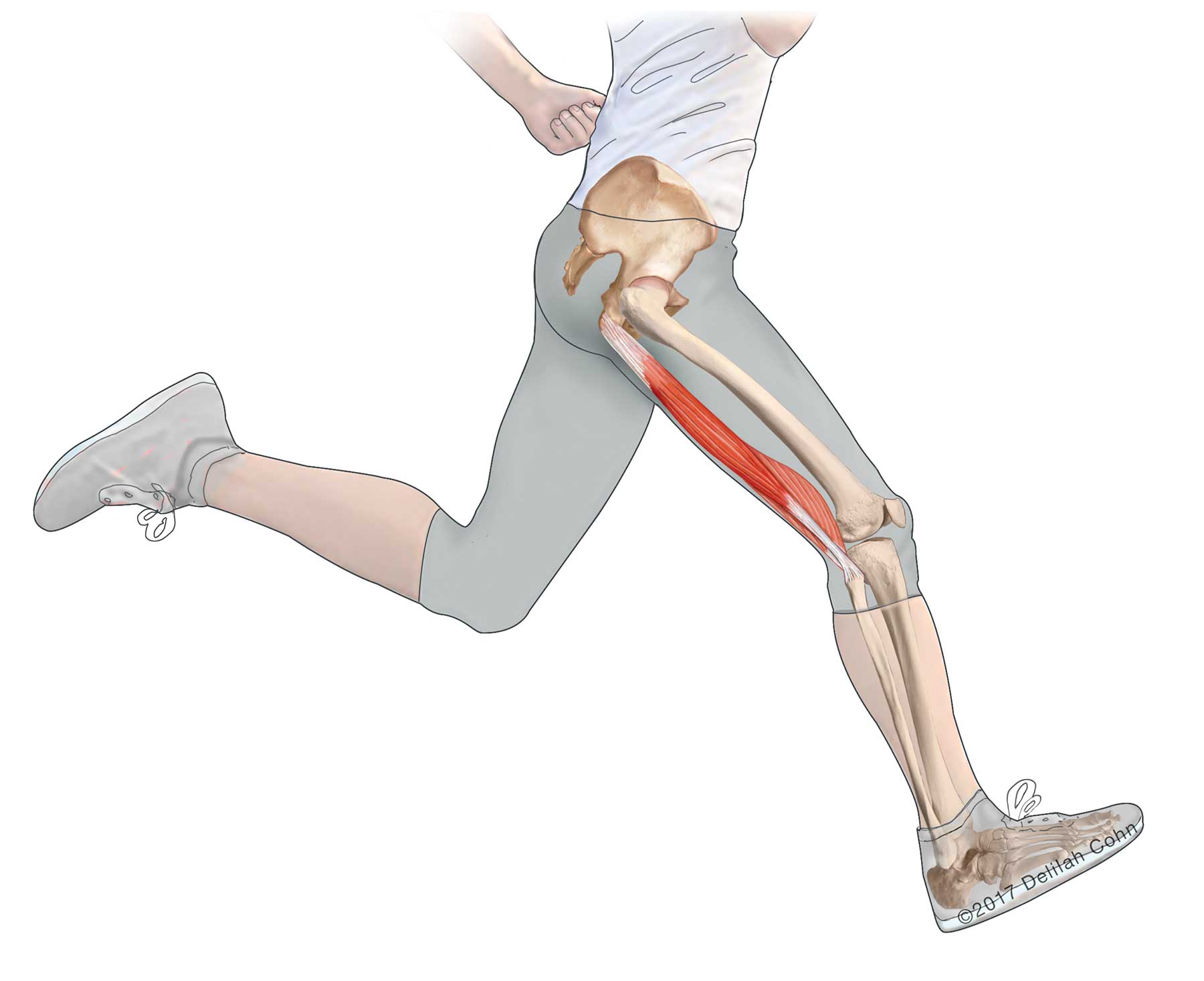
- Particularly biceps femoris is the most commonly injured muscle the reasons which could be:-
- There are 2 nerves that innervate the muscle. Sometimes this may lead to improper stimulation of the muscle reducing its capacity to generate effective tension in turn affecting the movement and leading to injury.
- The starting point of the muscle is extensively on the thigh bone. Weakness in the same affects movement not just at the knee but also at the hip.
- The muscle ends on the shin bone below the knee and has fascial connections with one of the ankle muscles namely the peroneus longus. So if there is a previous history of knee \ankle injury, it could later function of the joint at the shin level thereby affecting the functioning of this muscle? (speculative)
- The hamstring group of muscles especially semimembranosus is closely linked to the knee joint and the ACL ligament via mechanoreceptors. The feedback received from ACL ligament when disturbed affect the hamstring activation increasing the chances of injury.
- There is a deep anatomical link between the hamstring, the lower back, and further muscles above the lower back via the superficial back line as explained in the concept of anatomy trains. Hence sometimes a tight lower back can increase the chance of a hamstring injury.
- Posterior compartment syndrome of the thigh caused by chronic exercise or following recurrent minor distension injuries or muscle Ruptures-Fasciotomy.
HOW THE HAMSTRINGS STRAIN INJURY OCCURS?
Most people try to understand “why the hamstrings pain” and this article can answer that by making you understand the mechanism or how the HSI occurs. Researchers have reported 2 different injuries-a ‘high-speed running type’ (in sprinters) and a ‘Stretching’ type (in dancers).
Hamstring stretch injury
stretch-type injuries concluded that injuries occur due to extensive hip flexion with simultaneous knee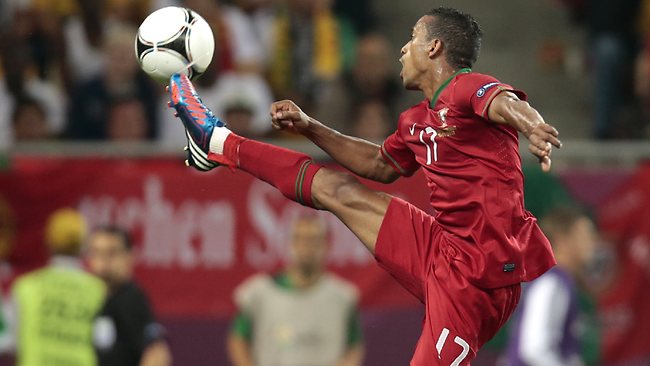 extension. In Australian football, a total of 19% of hamstring injuries occur during kicking, which is a typical stretch-type hamstring injury, given that the end of a kick exhibits both a flexed hip and extended knee position. In addition, suggested that trying to pick up a ball from the ground while running at full speed is the most common hamstring injury situation.
Strength-related hamstring injury
Fatigue while playing football may reduce eccentric hamstring strength, which was suggested to increase the risk of a hamstring injury, while lower hamstring strength endurance was associated with a hamstring re-injury. One study compared muscle activity in athletes with previously injured and uninjured hamstrings and reported that the previously injured athletes had inferior hamstring activation, which contributes to lower hamstring strength. These findings are most probably related to risk factors for suffering a subsequent injury, which may in turn help to improve rehabilitation, rather than being related to the mechanism of a hamstring injury
- The initial loss of flexibility and strength was greater in the sprinter than in the dancer.
- However, the actual return to sport took longer in the dancer (52 weeks) when compared to the sprinter (16 weeks).
- The MRI findings of the sprinter showed involvement of the muscular tissue while the dancer had more proximal tendon involvement.
So Yes as per the research how your leg was injured will make a difference along with the history of previous injuries, age, fitness, and the surface on which the sport is conducted
FOOTBALL is the only high-speed sport where there is a possibility of having this injury due to an overstretch or strength-related issues
RISK FACTORS INFLUENCING HAMSTRING INJURIES: –
The recent researches differentiate these factors into two different categories non-modifiable and modifiable risk factors:-
Non-Modifiable risk factors include: –
- Age: – older athletes have a history of injury which makes them vulnerable to a HIS. “old” is difficult to define the cause of HSI. Can influence as early as 24 years of age. The other issue with older athletes is their structural changes, fiber type changes in the muscle, and reaction timing issues which can be the reason they are more susceptible to injury.
- Previous HIS: – previous injury can result in structural and neurological injury and result in maladaptation in the form of improper muscle activation of the hamstring muscle, strength deficits, or shift of the muscle load on the shorter units within the hamstring muscle group. Also the longer the deficits in the muscle, the lower the ability of the muscle to handle stress and strain.
- ACL injury: – research has claimed 70% of the players post ACL injury are susceptible to a HIS> the mechanism could be proprioceptive deficits, post-op weakness due to graft removal, or altered gait pattern could be the reason.
- Previous Knee injury, Ankle ligament injury or Calf strain injury: – either of these or in combination change the mechanics of the lower body when it functions in sport, leading to increased chances of an injury.
Modifiable risk factors:-
- Architecture and structure– biceps femoris fascicle length, and hamstring muscle-tendon unit stiffness were associated with risk but the level of evidence is low over various articles.
- Strength and strength-endurance tested in single-leg bridge or Nordic eccentric curls did point out a risk but there is conflict. Low eccentric strength as tested in Nordic does not mean you are predisposed to HSI. Nor does isokinetic testing reflect on HIS possibility.
- How high you jump or the power generated does not matter but a reduced single-leg hope distance means that you are susceptible to a hamstring strain.
- Research says that flexibility-related issues do not have any relation with HIS.
- Reduced trunk muscle activity and increased activity in one of the hip muscles found in athletes running at the speed of 12-15km/hr have an increased risk of HIS.
- When kinematics or how effectively your run was measured, runners with increased side bends while running and anterior pelvic tilt in the back swing phase of the leg have high chances of a HIS.
“MODIFIABLE LIST OF FACTORS CAN BE WORKED UPON DURING A PRESEASON TRAINING SESSION OR IN GENERAL WITH PREHAB PROGRAM SPECIFIC TO THE SPORT”