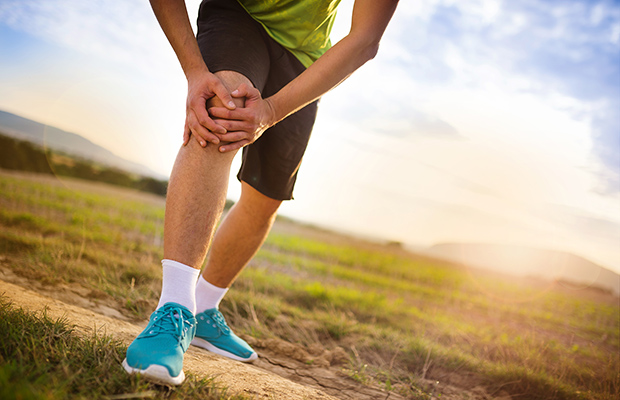
Anyone can be a victim of a knee injury; whether you are a professional athlete, a weekend fitness buff or someone just busy carrying out your day-to-day activities. The knee joint is unique in that it carries body weight at the same time as it provides flexibility and mobility. It is formed by the femur, the tibia and the patella and held together by muscles, ligaments and tendons. This construction predisposes the joint to risk of injury from sudden movement and repeated wear and tear.
Some common knee injuries
- Ligament sprains– ligaments are bands of strong tissue that stabilize the knee joint together. Overstretching can cause the ligament fibre to tear and bleed into the surrounding tissues, causing pain, swelling and a feeling of ‘giving way’. Severe tears like ACL Injury may require surgery.
- Cartilage Tears – cartilage also helps stabilize and protect the knee joint. Pressure from twisting and turning during weight-bearing exercise like squash may tear the cartilage, causing pain, swelling and locking of the knee joint leading to problems like Chondramalacia patellae
- Tendon Strains – tendons are cord-like bands that connect muscle to bone. The patellar tendonconnects the kneecap (patella) to the tibia (shin). Patellar tendonitis or ‘jumper’s knee’ is inflammationof the patellar tendon. This is an overuse injury commonly caused by repeated jumping, as in
- Patello-Femoral Syndrome – excessive friction between the surface of the patello-femoral joint (kneecap) and the femur (thigh) can result in knee pain. It may have a number of causes and should be assessed by your physiotherapist.
Mechanism of injury:-
Knee injuries can be caused by trauma, such as an accident or a fall, or even by a sudden increase in your daily activities. Other injuries develop over time, from factors including structural problems within the joint itself, incorrect athletic training methods or technique, and poor equipment.
- Footwear –a new pair of athletic shoes or a change to heels instead of flats can affect the way you walk and, in turn, can place stress on the muscles and tendons around the knee joint. selecting The Running Shoe should be carefully thought about
- Frequency and intensity of a regular activity – Any change such as jogging or playing tennis on a different surface can affect the knee joint. For example, simply moving the activity from a soft track or clay court to a hard surface such as a road or hard court can add stress to the knee joint and increases the risk of injury.
- Compensation for an injury elsewhere. A blister on your foot, for example, may cause you to change the way you step to minimize the pain, thus placing a strain on the knee.
MANAGEMENT OF KNEE PAIN:-
how effective is physio in problems like knee osteoarthritis?
There is good evidence to support the physiotherapy management of knee OA. The main areas supported by research include:
Physiotherapy vs arthroscopy for knee OA: physiotherapy exercise and education, combined with standard medical care (simple pain medication) is equally effective to keyhole knee surgery (arthroscopy) in the management of knee OA. In people with moderate to severe knee OA, it has been found that arthroscopy added no additional benefit in terms of physical function, pain or quality of life, when compared to physiotherapy and simple medication. In addition, physiotherapy has been shown to have minimal risk of negative side effects compared to surgery.
How to Prevent Knee Injuries
Obviously it’s impossible to completely eliminate knee injuries, but athletes can take proactive steps to keep their knees healthy and strong. Follow these three guidelines in your training program:
- Develop lower body strength for additional joint stability. The hamstrings are a particular cause for concern, because weakness there is associated with a higher probability of ACL injuries. Perform exercises like Squats, Deadlifts and RDLs, which develop the quads, hamstrings and other lower body muscles for balanced muscle strength.
- Develop proper technique for running, jumping and other lower body skills
- Perform plyometric exercises to improve technique and muscle power, teaching muscles to fire and stabilize the joint immediately after the foot touches the ground
Treating knee Injuries:-
Treatments are usually injury specific. In acute stages ice, rest from activity, control excessive swelling and unload the joint with crutches or cane. Bracing or splinting can be useful if there is instability.
We recommend to avoid anti-inflammatories, as they may interfere with the necessary stages of healing, which includes a healthy inflammatory response. Early range of motion activities and other light activities are encouraged.
At Physiocure we work at resolving these knee injuries by following a structured rehab programme which will include the following goals:-
- Reduce pain
- Restore Mobility
- Develop control and strength
- Improve and maintain alignment
- Return to sport/work
When Should You Consult a Physiotherapist?
If you some exercises/workout and they increase your knee pain or the condition doesn’t improve, a physiotherapist can help design a more personalized exercise prescription for you.
It is also important to note that there are many different conditions that can produce knee pain. Therefore, one must be careful to self-diagnose with any particular knee injury and seek professional help to get the correct evaluation and appropriate treatment.
As a general rule, I recommend seeking treatment for any injuries that have not resolved within two weeks.
We cater to knee injuries like:- ACL Injury, Meniscal Injuries, Chondramalacia patellae, Patellofemoral Pain Syndrome, Patellar tendinopathy

